2 Week Turkey Itinerary: Istanbul, Cappadocia and the Aegean

Two weeks in Turkey is a perfect amount of time to experience the country by combining three characteristic regions without feeling like you are trying to squeeze too much in.
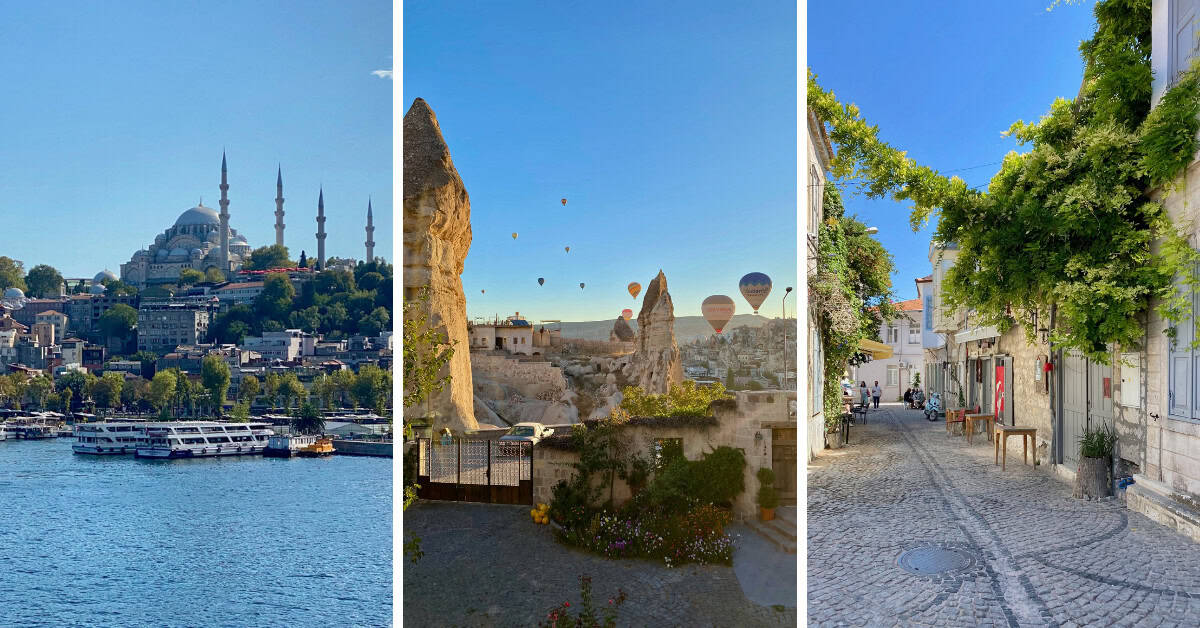
The two-week Turkey itinerary below combines the legendary city of Istanbul, the magical fairy land of Cappadocia, and the quiet old town of Alaçatı on the Aegean Coast.
I have followed this itinerary twice to show both family and friends a few distinctive sides of Turkey. Istanbul is split into two parts, with three days at the start of the trip and four at the end. In between, there are three nights in Cappadocia and four slower nights in Alaçatı.
While some itineraries try to include five or even six stops, I find that this itinerary, focused on three characteristic regions of Turkey, lets each place reveal itself slowly. The Aegean also serves as a relaxing buffer between exploring Cappadocia and Istanbul.
Your 2 Week Turkey Itinerary at a Glance
The itinerary below covers 14 full days in Turkey, with the flight home on day 15.
| Days | Destination | Nights | Highlights |
| 1 to 3 | Istanbul (Part One) | 3 | Hagia Sophia, Blue Mosque, Topkapı Palace, Galata Tower, the bazaars, Fener & Balat |
| 4 to 6 | Cappadocia | 3 | Hot air balloons at sunrise, valley hikes, Göreme Open Air Museum, the Green Tour |
| 7 to 10 | Alaçatı (on the Aegean) | 4 | Old town, windmills, beaches, meyhane dinners, a day trip to Ephesus, Urla, or İzmir |
| 11 to 14 | Istanbul (Part Two) | 4 | A slower day in Kadıköy and Moda, Üsküdar and the Maiden’s Tower, ending with a hamam, Arnavutköy, Bebek, and Rumeli Fortress |
| 15 | Departure | 0 | Fly home from Istanbul |
What to Know Before You Go
Below are a few practical considerations to help you plan your two weeks in Turkey, including how long to spend in each region, the best time to visit, getting around, money, safety, and what to pack. If you have already sorted the logistics, feel free to jump straight to the itinerary.
Is Two Weeks Enough for Turkey?
Yes, two weeks is a great amount of time for a first visit and gives you the opportunity to explore a few different regions of such a diverse country. In this itinerary, each of the three destinations fits comfortably within the ideal length of stay.
Istanbul is an immense and captivating city, so you could very well spend weeks touring it, but spending 3 to 7 days gives you plenty of time to see it. In Cappadocia, two to three days tends to be the sweet spot. A stop in the Aegean adds a more relaxing, equally enchanting element to your visit, and in Alaçatı, three to four days is ideal.
I recommend sticking to three regions rather than trying to squeeze too much in, because you will get a varied experience of the country while still having time to enjoy slower moments.
Best Time to Visit Turkey
Spring and autumn are the best times to visit Istanbul and Cappadocia. Typically, the ideal months are between April and early June, or from September to early November.
Alaçatı is slightly different. It is best to visit between June and September, when the days are warm, and the water temperature is much more pleasant.
July and August are still considered high season, but both Istanbul and Cappadocia can be extremely hot during the day, which can make touring and hiking less enjoyable.
September is when all three line up best, and this is when I would recommend going if possible. Both times I used this itinerary were in September, when the mornings and evenings are nicely fresh and the days are warm for exploring or being near the water.
Early June can also work, although the Aegean water may still be a little cool.
Getting Around Turkey
This itinerary relies on three short domestic flights to get between destinations.
Domestic flights are quite affordable when booked in advance. Pegasus is usually the most budget-friendly, but Turkish Airlines, AJET, and SunExpress also serve the routes to Cappadocia.
Many domestic flights depart from Sabiha Gökçen Airport on the Asian side rather than the newer Istanbul Airport. It usually has the most options, so it is perfectly fine to book there, but keep it in mind when planning your transfer, since it is on the opposite side of the city from the main sites.

In Istanbul:
In Istanbul, I recommend using public transportation, which is clean, reliable, and safe. You will need an Istanbulkart, a contactless card that works across buses, trams, the metro, and ferries.
When you need a taxi, BiTaksi and iTaksi are more reliable options than Uber. All three options are serviced by taxis rather than normal vehicles, but I find that BiTaksi is the most reliable.
You can read my full guide to getting around Istanbul and avoiding taxi scams!
In Cappadocia:
In Cappadocia, the towns are small and easy to explore on foot.
Your hotel can easily arrange transport from the airport to the towns. Most offer shuttle services at a very reasonable price.
The organized tours will cover the main sites with transport included, and dolmuşes (shared public minibusses) run between the towns should you need them.
You can read my full guide on getting to and around Cappadocia!
In Alaçatı (on the Aegean):
In Alaçatı, you walk inside the old town.
To reach the town from Izmir Airport, you can take the Havaş Airport Shuttles, which drop you in the town center. You can find a full schedule on the official site. Alternatively, your hotel can arrange a private transfer.
Getting to the beaches will require a car, but most hotels can arrange transport, and a dolmuş also runs between Alaçatı, Çeşme, and Ilıca, as well as some other nearby beaches.
Cash, Currency and Tipping
The currency is the Turkish Lira, and it is best practice throughout your travels in Turkey to carry cash and small bills. Credit cards are widely accepted, but cash will serve you well at the bazaars, for street food, for tipping, and especially when bargaining.
I’ve been able to get a significantly better price on unique souvenirs when paying in cash.
Cappadocia is the exception when it comes to Turkish lira. The tourism industry there prices many of its services in euros, including the hot air balloon ride and many of the tours. It is best to bring euros or USD with you, as ATMs in the towns are limited and often run out of cash.
Tipping in Turkey is mostly optional, you do it when you are happy or impressed by the service. At restaurants, the standard practice is to leave 10 to 15%, and when taking a taxi, it is customary to round up the fare.
You can read my full guide on tipping in Turkey!
Is Turkey Safe?
Absolutely! Whether you are a family, a group of friends, or even a solo female traveler, Istanbul, Cappadocia, and the Aegean Coast are very safe destinations.
Istanbul is a megapolis, so it is best to practice the same caution that you would in most other large cities, but petty theft is rare when compared to places like Italy or France. That said, it is best to be aware of your surroundings, use your gut, and avoid areas that look desolate, especially since you are not familiar.
Cappadocia, on the other hand, is extremely safe because it is a destination that relies on tourist visits. The Aegean Coast, while often more local, is also very safe.
The art of hospitality is ingrained in Turkish culture, most Turks are warm and incredibly helpful.
I also have a guide on safety for women traveling to Istanbul, and some of the tips here apply across Turkey.

What to Pack
The most important things to pack will vary slightly for each of the destinations, but not drastically. Below you have it broken down by location!
For Istanbul:
If you have ever visited the hilly cities of San Francisco or Lisbon, then you can imagine the same steep hills in Istanbul. One of the most important things to pack is comfortable footwear.
Istanbul is known as the City of Seven Hills, and as the name suggests, you will encounter many hills during your visit. While you can avoid them on public transportation in places like the historical peninsula, these hills are an integral part of a complete visit.
I always recommend carrying a light scarf or pashmina. Istanbul’s grand mosques require you to cover your head, shoulders, and knees. Most mosques will usually provide appropriate garments, but having your own scarf is best in case you decide to visit less touristic mosques.
For Cappadocia:
Cappadocia is a region in central Turkey on a high-altitude volcanic plateau, so mornings and evenings are cold regardless of the season, and summer days are particularly hot. The key here is packing layers!
If you plan to take the hot air balloon ride, which takes place at elevation in an open basket, wear something warm. I bought a shawl during my visit to enjoy the open rooftops and the hot air balloon ride.
For Alaçatı (on the Aegean):
Alaçatı has a coastal climate, so pack light beach clothes and a bathing suit for the crystalline waters awaiting you. You will also want to take light knitwear or repurpose that pashmina from Istanbul for the breezy Aegean evenings.
Get an eSIM for internet access: My last recommendation won’t go in your luggage, but it is just as important. Translation apps and maps can be a huge help during your trip. I’ve used Airalo for years across many countries. It is a convenient, affordable option that offers eSIMs starting at $4.
Days 1 to 3: Istanbul, Part One
The first three days will be spent discovering Istanbul’s most iconic landmarks. This is the most sought-after face of the city.
The days below are a condensed version of my full itinerary, which also includes transportation tips between each stop, ticket details, and restaurant recommendations. You can find it here: 3 Days in Istanbul: Perfect Itinerary Ideas.
Where to Stay for Part One
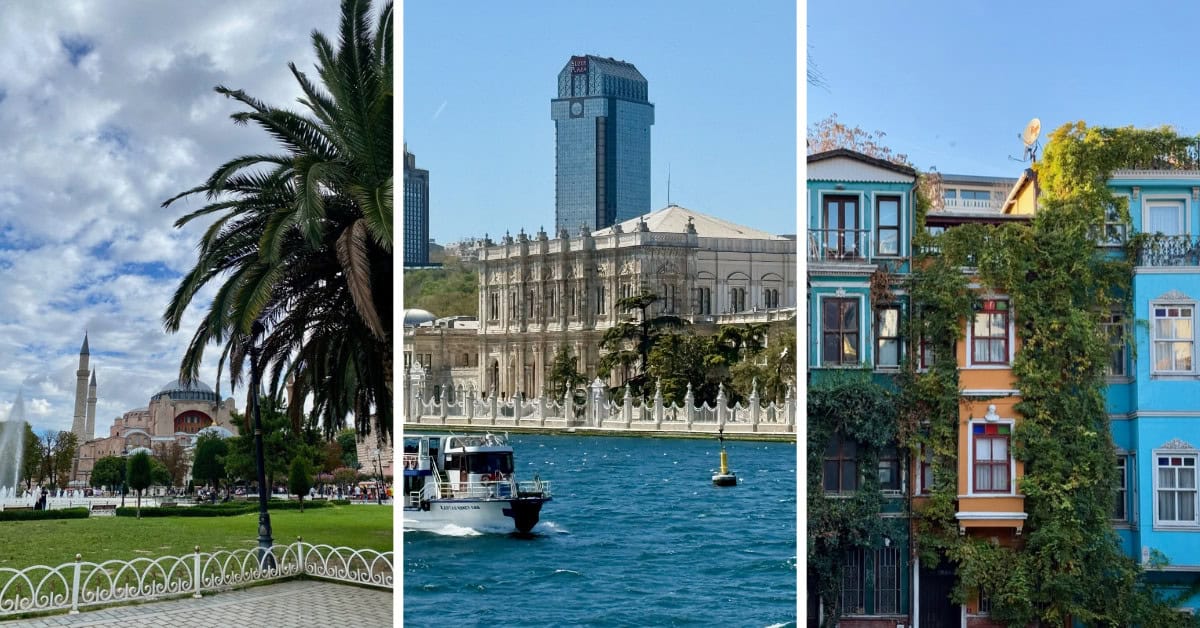
For the first part of your trip, it is best to stay on the European side, close to the main sites. The Galata area is a great option. While popular amongst tourists, it has a lively, relaxed feel, with terraces and cafes along its cobbled streets.
My first time in Istanbul, I stayed in the area of Galata. A few recommendations:
- Pera Palace Hotel: originally constructed to host passengers of the famous Orient Express, including the writer Agatha Christie.
- Georges Hotel Galata: once a chandelier workshop before being restored in 2011.
- Meroddi Galata Mansion: only a few meters from the Galata Tower, with a pleasant coffee shop.
You can find my full where-to-stay guide for Istanbul here!
Day 1: The Historical Peninsula
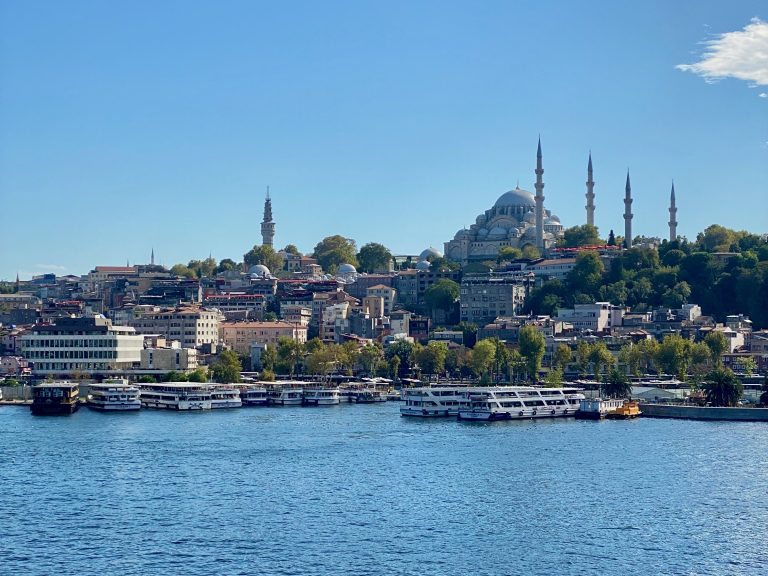
Spend the first day exploring the Historical Peninsula, also known as Eminönü. The easiest way to travel between the sites will be by foot, with only 5 to 10 minutes between each.
Dress modestly on this day, since the itinerary includes two grand mosques.
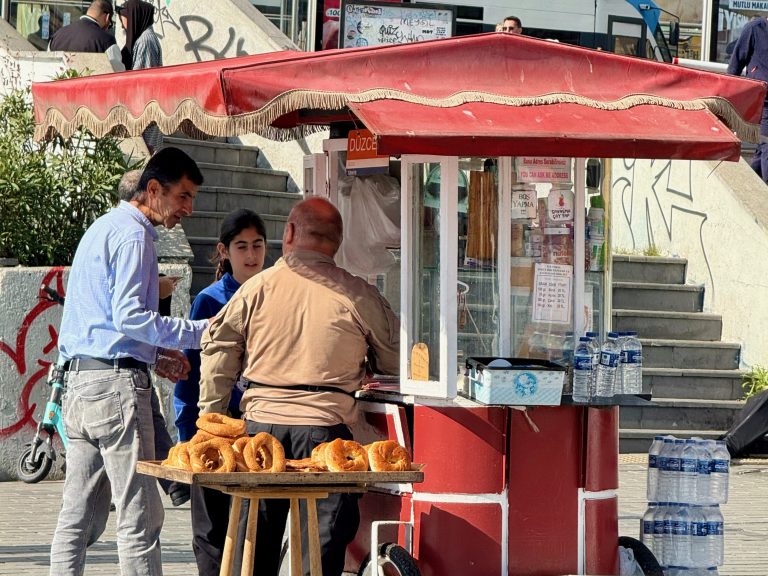
The day will begin at the Hagia Sophia, originally a Byzantine church built between 532 and 537 CE. If possible, arrive early in the day to avoid long waits. Afterward, enjoy a simit from one of the traditional red carts in Sultanahmet Park before making your way to the Blue Mosque located just across the square.
In the afternoon, visit Topkapı Palace, which served as the main residence for Ottoman Sultans until the 19th century. Consider the combined ticket, which includes the harem and the Hagia Irene.
If time allows, the nearby Basilica Cistern is quick to visit if you buy tickets online.
End the day with an enchanting ride on the Bosphorus. The Turyol ferry is about 1.5 hours and can be boarded in either Eminönü or Karaköy. The ferry to the Asian side will come later in the trip!
Day 2: Cihangir, Dolmabahçe and Galata
Begin the day with a traditional Turkish breakfast at Van Kahvaltı Evi in Cihangir. Turkish breakfast is a serious affair, so enjoy a slow, indulgent morning! Afterward, stroll around Cihangir and Çukurcuma, known for their bohemian feel and antique shops.
Then take the T1 tram to Kabataş station and visit Dolmabahçe Palace, Turkey’s largest palace.
From there, head back to the Galata area and walk up the Camondo Stairs for a more scenic route to the Galata Tower.
End the day on Istiklal Street or at Galata Port to shop or simply stroll and people-watch. Istiklal Street is one of Istanbul’s most iconic shopping high streets, featuring mass-market and affordable brands. Galata Port, by contrast, is a newer outdoor shopping complex that focuses mostly on upscale and luxury shops, with many cafes, restaurants and a seaside promenade located in Karaköy.
For dinner, Yeni Lokanta and Mürver are both in Istanbul’s Michelin Guide and nearby.
Day 3: The Bazaars, Süleymaniye and Fener & Balat
On the third day, return to the Historical Peninsula. Start at the Spice Bazaar, located in Eminönü Square. The Grand Bazaar is only a 10-minute walk from there.
If you have the possibility, carry cash, since most shops expect you to bargain.
Stop for a quick bite at Dönerci Şahin Usta, just outside the Grand Bazaar, then walk 10 minutes to the Süleymaniye Mosque. This one is my personal favorite, and its gardens offer a beautiful view of the Golden Horn.
In the afternoon, take the T5 tram to Fener and spend the rest of the day wandering the colorful streets of Fener and Balat.
I recommend an early night, since you will be flying to Cappadocia the next day.
Days 4 to 6: Cappadocia
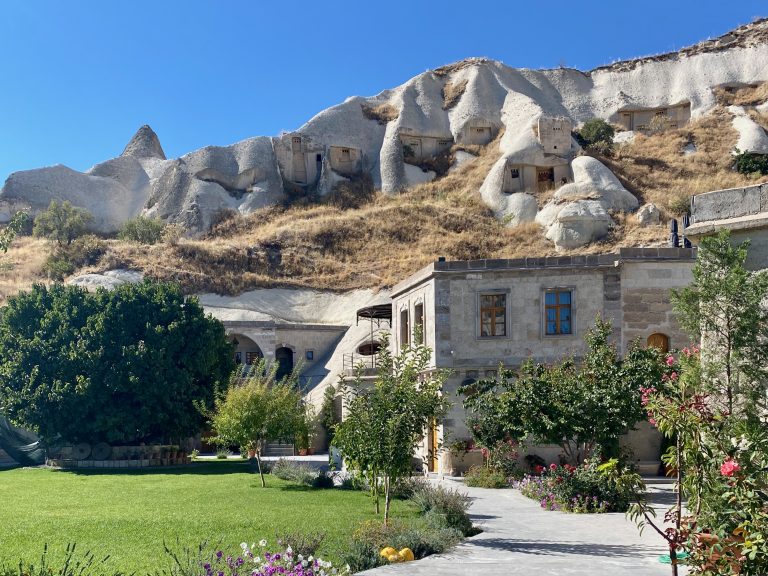
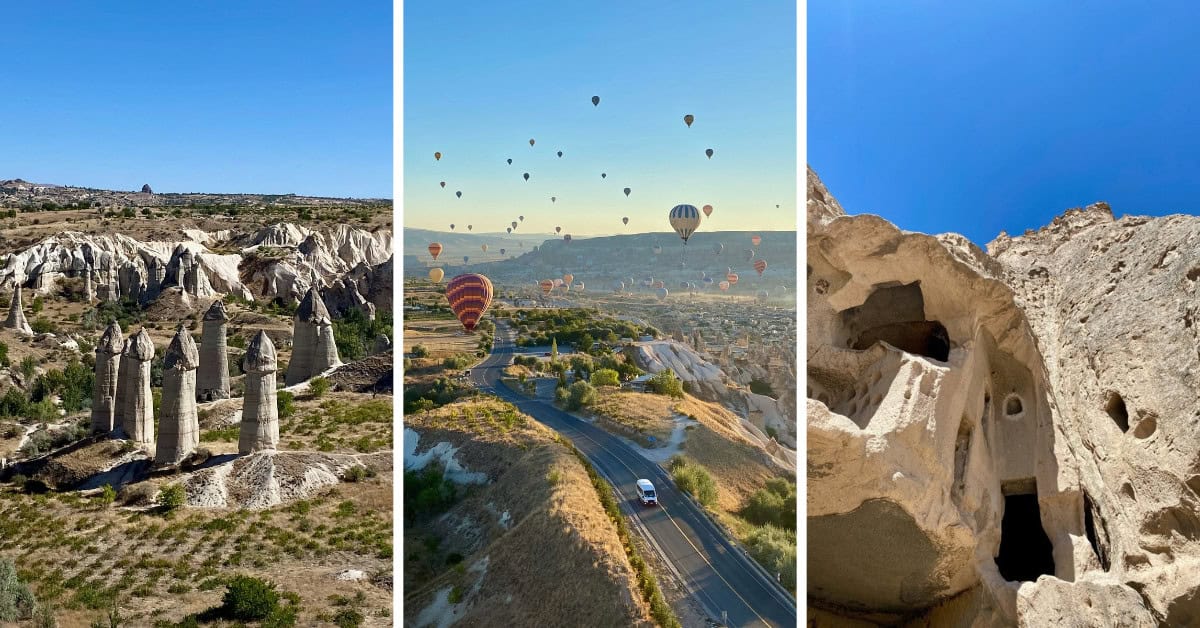
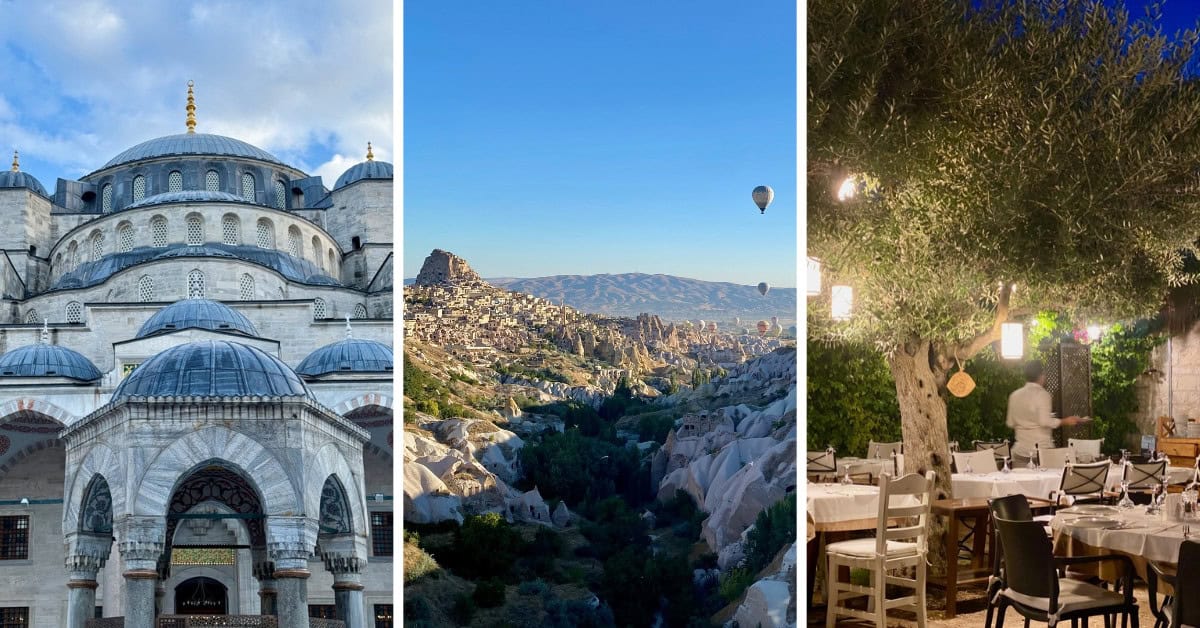
Cappadocia is a magical region in central Anatolia, known for its fairy chimneys, cave hotels, and underground cities. Locals proudly refer to it as the Land of the Fairies.
Three nights in Cappadocia will give you an arrival afternoon, two full days, and an early start on the morning of day seven for your flight to İzmir. In my experience, this is the sweet spot. The towns are rather small, and the main highlights of the region can be covered comfortably in that time.
That said, if you would like a slower pace or more detail on each stop, have a look at my full Cappadocia itinerary.
Getting to Cappadocia from Istanbul
Flying is the fastest option and the one I recommend. From Istanbul, the nonstop flight is just over an hour and is usually quite affordable, typically between 50 and 100 euros when booked in advance.
There are two airports that serve the region, Kayseri (ASR) and Nevşehir (NAV). I have flown into Kayseri both times, and it has been a perfectly smooth experience. You will also find more options at better prices.
Neither airport is in the region directly, so you will need a transfer of about 1 to 1.5 hours. Nearly all hotels offer a shared shuttle service at an affordable rate. It is worth letting your hotel know a few days in advance that you need one.
For more details on transportation, I have put together a complete guide on How to Get to Cappadocia.
Where to Stay in Cappadocia
The most unique and memorable way to stay in Cappadocia is in one of its famous cave hotels.
While most of the area now features cave hotels, people have lived in these cave dwellings in Cappadocia for centuries. Many cave hotels are also affordable or comparable to more modern lodgings.
Göreme is the most central base and where most visitors stay. I based myself in Göreme on both visits and found it charming and convenient.
Ürgüp is known for having a more local feel. Uçhisar is calmer and offers some of the region’s most spectacular views because it sits on the region’s highest point.
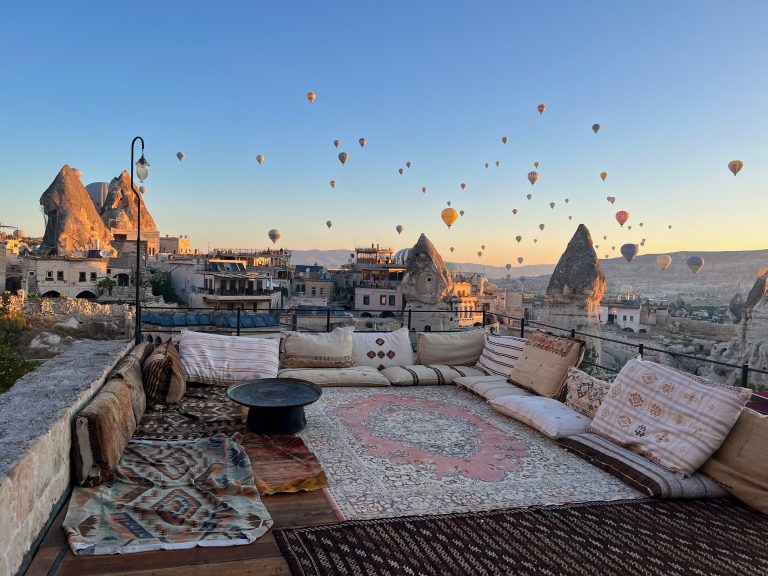
I stayed at Lunar Cappadocia Hotel on both of my visits and would stay there again! It is located at the upper end of Göreme, only a 10-minute walk from the center of town, and the rooftop is a great place to watch the balloons.
For more details on lodging in Cappadocia, visit my Where to Stay in Cappadocia guide.
Day 4: Arrival, the Valleys and Your First Sunset
On your first day, after checking in, take a stroll around town. You will find streets lined with small shops selling carpets, pottery, and handwoven scarves.
For the afternoon, the Rose Valley and Red Valley hike is one of the most beautiful ways to spend your first day. Most visitors time it to reach a viewpoint around sunset. If you are staying in Göreme, you will need a taxi to the starting point. Remember to arrange a return with the same driver, since it will be dark by the time sunset passes.
If you prefer a more relaxed first evening, consider watching the sunset from a rooftop instead. Seten Restaurant in Göreme has breathtaking views of the valley, and you will be able to try local wines.
I recommend an early night, as pickups for the hot air balloon are typically around 4 a.m.
Even if you aren’t planning to do the hot air balloon ride, I recommend an early morning to see the balloons flying over the valleys from your hotel.
Day 5: Hot Air Balloons, Göreme Open Air Museum and Uçhisar Castle
Day five will start early, whether you are riding a hot air balloon or watching them fly over the valleys.
I recommend booking the hot air balloon for this first morning. Flights can be canceled due to weather, and booking at the front end gives you a buffer day to rebook. Ideally, book a month ahead, since availability fills up quickly. I personally used Butterfly Balloons and had a great experience.
On my second visit to Cappadocia, I simply woke up early and watched the balloons from the hotel terrace. It was equally magical and worth the early start. Do not feel like you are missing out if the balloon is not in the budget.
After a relaxed breakfast, head to the Göreme Open Air Museum, a UNESCO World Heritage Site with rock-cut churches and frescoes that have survived centuries. The Dark Church charges an additional fee, but the frescoes are well worth it. Love Valley is close by and can easily be combined with the museum.
Later in the afternoon, head to Uçhisar Castle, Cappadocia’s highest point. On a clear day, you can even see both Mount Erciyes and Mount Hasan on the horizon. It is also a wonderful spot to watch the sunset over the valleys.
Both the Göreme Open Air Museum and Uçhisar Castle are included in the Red Tour should you prefer to book a tour for the day. This is doable even if you have booked a hot air balloon ride. You will be back at your hotel around 8 am, and the tours will pick guests up between 9 and 10 am, giving you enough time for breakfast.
Day 6: The Green Tour
Day six is a full day out on the Green Tour. It takes you to several of the region’s most historically significant sites in a single day, with transport and a guide included.
The tour will visit one of the underground cities, either Derinkuyu or Kaymaklı. Derinkuyu is the largest and is believed to have held up to 20,000 inhabitants. Please note that this experience can be overwhelming for those with claustrophobia.
The day continues with a tranquil hike through the Ihlara Valley alongside the Melendiz River, followed by Selime Monastery and a panoramic stop at Pigeon Valley.
If you’re deciding between the Green and Red tours, I recommend the Green Tour and visiting the Göreme Open Air Museum on your own. Otherwise, some tours combine the highlights from the Green and Red Tours. I did the latter on my first visit and opted for the Green Tour on my second visit.
Days 7 to 10: Alaçatı and the Aegean Coast
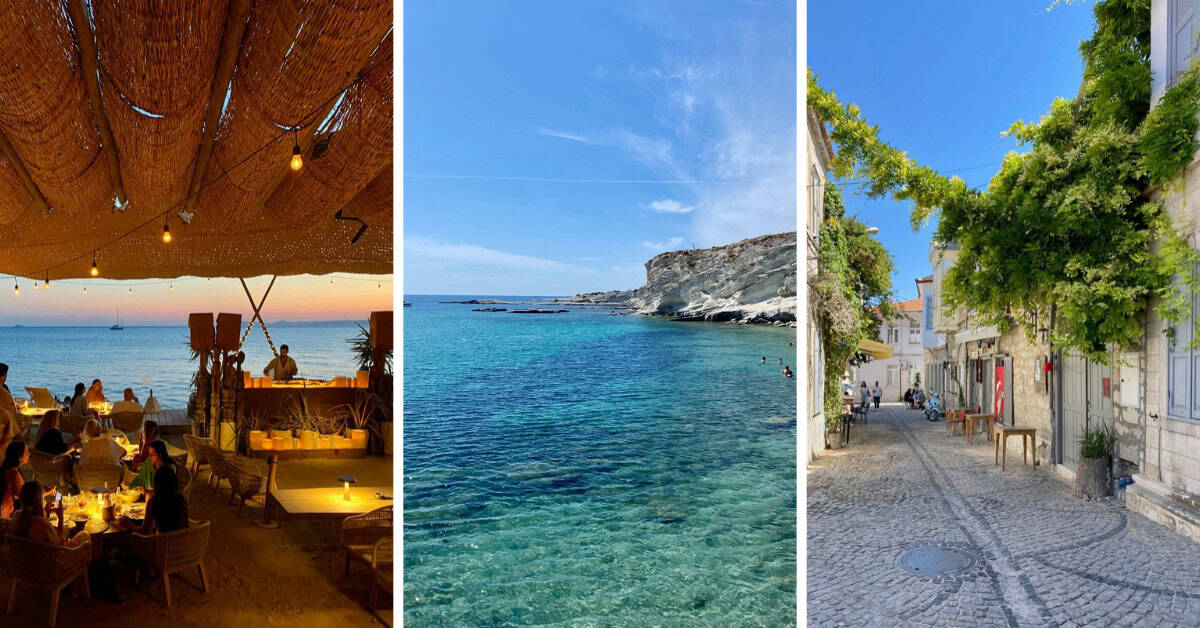
After Istanbul and Cappadocia, Alaçatı is the quiet stop. Four nights here let you slow down before returning to Istanbul.
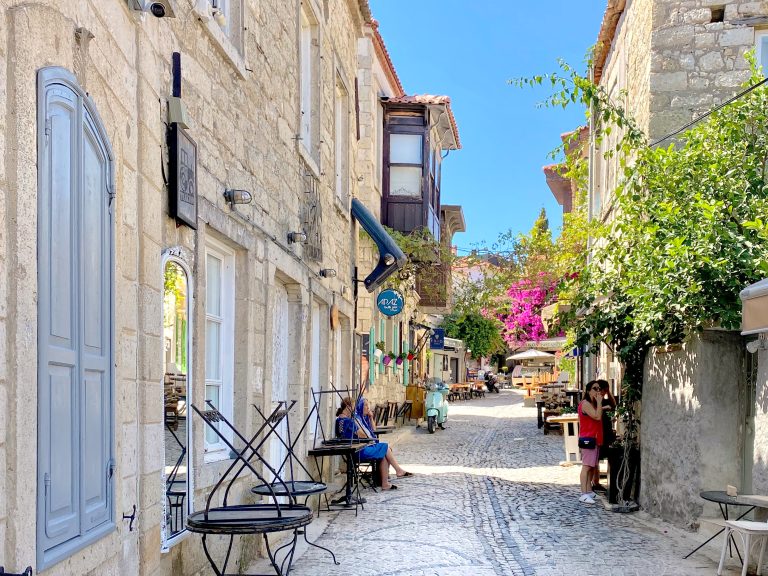
Alaçatı is a quaint town in the Çeşme area of İzmir Province. Cobbled streets line Greek-style stone houses, with magenta bougainvillea flourishing across roofs and walls. The visitors are mostly Turkish. That is part of what keeps it feeling local and authentic.
There are many activities in and near Alaçatı, but in my experience, some of the best are simply food, water, and the old town itself. I’ve loved it as a stop between days filled with museums, tours, or busier cities.
For more information on the Old Town and Things to do in Alaçatı, see my guides below.
- Best Things to Do in Alaçatı: Turkey’s Chicest Aegean Town
- Old Town Alaçatı Turkey: A Beautiful Aegean Village
Getting to Alaçatı from Cappadocia
The best option will be to fly from Kayseri to İzmir. There are direct flights, and the flight is approximately one hour and thirty minutes.
From İzmir Airport, Alaçatı is about an hour’s drive, but it can take longer during morning and evening rush hour.
The most affordable option will be to take the Havaş Airport Shuttles, which drop you in the town center. You can find a full schedule on the official site. Most hotels in Alaçatı can arrange a private airport pickup. It is not prohibitively expensive, roughly around one hundred euros, but it is worth asking when you book.
Renting a car is another option and gives you the most flexibility for the beaches and day trips.
Where to Stay in Alaçatı
Staying in the old town is the best choice. The accommodation there is almost exclusively boutique hotels inside the old stone houses. Waking up inside the old town and stepping out onto the cobbled street is a lovely part of the experience.
- Alavya ($$$): featured in the Michelin Guide, with a pool, garden courtyard, on-site restaurant, and wellness services; located off the main street of the old town.
- Gaia Alaçatı ($$): in the old town, with Turkish breakfast and earthy décor.
- Morisi Avlu Alaçatı ($): a renovated Greek stone house in the old town with a wonderful breakfast served in the courtyard.
I’ve stayed at all three on different occasions, and I have been equally impressed!
Day 8: Before Sunset Beach Club and a Night in Town
Begin with a slow breakfast at your hotel and coffee in town, then spend the afternoon at Before Sunset, my recommended beach club in Alaçatı. It is one of the best-known and fully serviced beach clubs in the area: plush sunbeds, a restaurant, boutiques, and wellness workshops. The beach is shallow at first, then deepens, which makes it pleasant for swimming.
It is on the pricier side, and reservations are essential during peak season, usually through WhatsApp.
As the name suggests, it is also a lovely place to watch the sunset. Usually, a DJ will set up in the restaurant area, and people gather to enjoy the sunset.
Afterward, head back to the old town for dinner. Many restaurants serve meyhane-style, with meze plates shared around the table and local wine from native Turkish grapes. Alaçatı is near Urla, one of Turkey’s most famous wine-producing regions, so definitely try the wine!
Two of my favorites are Fava and Otaya. Fava has tables set around an olive grove in a lovely courtyard garden. Ortaya is in a somewhat hidden courtyard with no sign, but great ambiance, and definitely try the orzo dish if it is on the menu.
Note: If Before Sunset is fully booked, The Beach of Momo is a smaller alternative with a similar setup.
For a beach without a reservation, Ilıca Beach is the closest to the old town, with calm, shallow turquoise water and affordable sunbed rentals. The dolmuş between Alaçatı and Çeşme also stops there.
Day 9: Delikli Köy and Dinner at Asma Yaprağı
After breakfast, prepare to spend the day at Delikli Köy, a public beach framed by chalky white cliffs about thirty minutes from the old town. Entry is free, but there is no development, so bring water, snacks, and an umbrella for shade. You can easily find all of this in the old town!
In the evening, have dinner at Asma Yaprağı, a short drive outside the old town.
This place is very special. It is a restaurant set in a garden with no set menu. Instead, you walk into the kitchen and choose your mezzes from what they’re preparing that day. This is a true farm-to-table experience that lets you try traditional dishes made only from regional ingredients.
It is part of Turkey’s Michelin Guide, so it is best to reserve ahead. The atmosphere is relaxed and family-oriented. I’ve visited twice and have been equally impressed. By far one of the most memorable dinners of my travels.
Day 10: A Day Trip from Alaçatı
For your last day on the Aegean, I suggest considering a day trip from Alaçatı. There are a few options that are only a couple of hours away: Ephesus, Urla and Izmir. You can find more detail on each in my guide to day trips from Alaçatı.
If you’d rather skip day trips, you can visit another beach or beach club. You can find my full guide here!
Ephesus:
Ephesus is one of the most impressive archaeological sites in the world and is about a two-hour drive from Alaçatı. Key sites include the Library of Celsus, the ancient theatre, and the ruins of the Temple of Artemis. Tour operators provide transportation from Alaçatı.
Ephesus is still on my list for a future visit.
Urla:
Urla is about 30 minutes from Alaçatı and is home to the Urla Wine Route, with vineyards offering tastings.
İzmir:
İzmir is about an hour from Alaçatı. Visit Konak Square and the İzmir Clock Tower, browse Kemeraltı Bazaar for shopping and street food, and stroll along the seafront Kordon Promenade. While there, try boyoz, a local pastry.
Days 11 to 14: Back to Istanbul
On day 11, you will fly from İzmir back to Istanbul. The flight is short, just over an hour.
Since the iconic landmarks have been covered in the first part of the trip, the last four days can be spent getting to know Istanbul at a slower pace.
These extra days give you time to explore lesser-known neighborhoods.
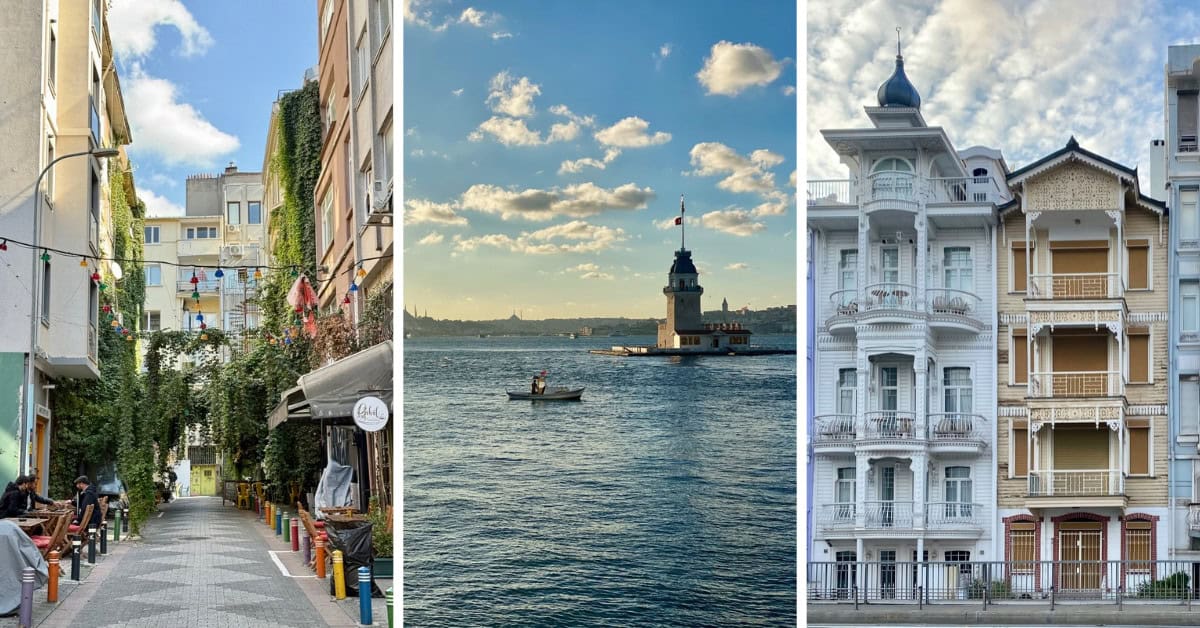
Kadıköy and Üsküdar on the Asian, or Anatolian, side offer a more local experience than the European side, which tends to be more tourist-focused. That said, Arnavutköy and Bebek on the European side are striking neighborhoods farther from the historical peninsula, where you can see traditional Ottoman waterside houses.
Where to Stay for Part Two
For the second half of your trip, consider staying on the Asian side. If you have more than 3 to 4 days, Kadıköy is a great option, and despite being on the Asian side, it is only a 20-minute scenic ferry ride to the Historical Peninsula.
Moda is my personal favorite. It is primarily a residential neighborhood, which makes hotel options scarce. Dekalb Hotel is located on Moda Caddesi near the waterfront promenade. When I stay in the area, I usually book my stay on Airbnb and stay in one of Yasemin’s properties.
Alternatively, you could stay in the well-connected Cihangir area, or opt for a more luxurious stay in Bebek or Arnavutköy.
Day 11: Arrival and a Meyhane Evening
After landing, settle in and keep the evening simple.
If you are staying in Kadıköy, head to the meyhanes near the Fish Market, many of which can be found on Güneşli Bahçe Street. A typical experience involves a table with multiple mezes, a bottle of rakı, conversation amongst friends, and eventually traditional, sometimes nostalgic, Turkish music.
If you are staying in Cihangir, you will have many restaurants nearby, or you can head to Galataport or Karaköy for dinner. Consider a rooftop for dinner or a nightcap. My dinner favorites are Mürver (above Novotel) and Le Fumoir (above Georges Hotel), and for a nightcap, Monkey overlooks the Golden Horn.
Day 12: Kadıköy and Moda
The day will begin at the Kadıköy Fish Market. It is worth a visit to see the picturesque stands brimming with fresh fish, fruit, and spices. Contrary to the markets on the historical peninsula, this fish market is frequented by locals. You will notice that in general, the Asian side of the city has a more local feel.
After you’ve had a look and done your shopping, head to Moda Caddesi, lined with cafes, restaurants, and traditional pastry shops, and stroll to the beautiful Moda Pier at its end (about a 20-minute walk).
Along the way, stop for coffee along the way or dondurma at Meşhur Dondurmacı Ali Usta. Dondurma is the traditional Turkish ice cream, which is rather unique due to its gum-like consistency,
Moda is a great place to get lost as you stroll. You will find many shops selling less traditional and more uniquely designed ceramic souvenirs, antiques, and vintage clothing. It also has its own smaller shopping high street on Gen. Asım Gündüz Caddesi.
In the evening, take a walk along the seaside promenade for a spectacular view of the Historical Peninsula, where many locals sit on the rocks to watch the sunset.
For dinner, Çiya Sofrası is one of Istanbul’s most famous restaurants. Around it, you will find many other meyhane-style options.
Alternatively, you could take your dinner and have it picnic-style on the rocks by the promenade. Zapata Burger remains the best burger I have had in the world, and I usually order takeaway to enjoy with a view of the Marmara and that historical peninsula.
Day 13: Üsküdar, the Maiden’s Tower, and Galataport or Nişantaşı
Begin the day in Üsküdar and make your way to Kuzguncuk, a small neighborhood known for its colorful wooden houses. I suggest walking; the route is scenic, with seaside stretches where you catch glimpses of the European side.
Its main avenue, İcadıye Caddesi, is lined with trees and is a lovely place to start the morning with coffee and a pastry. Beyond the coffee shops and robust trees, this avenue is known for the vibrantly colorful houses on Simitçi Tahir Sk.
Before you reach those houses, you will find the Kuzguncuk garden, where you can also catch a glimpse of the colorful houses. On weekends, a farmers’ market sets up in the garden, selling local goods and homemade bites.
Another street worth visiting nearby is Perihan Abla Street.
Afterward, head back to the seaside promenade, which starts where the Üsküdar ferries dock and stretches towards the iconic Maiden’s Tower. I particularly enjoy this walk on the weekend because you’ll see families, couples, and friends strolling along and enjoying the day!
One thing to keep in mind is that Üsküdar is more conservative, so it is recommended to dress modestly.
In the afternoon or evening, depending on how long you stretch the day in Üsküdar, you have two choices, both reachable by ferry: Galataport or Nişantaşı.
Galataport can be reached by taking the ferry from Üsküdar to Karaköy. Here you will find shops, restaurants, a seaside promenade, and two museums, Istanbul Modern and the Istanbul Museum of Painting and Sculpture. I highly recommend ending with a stop at Karaköy Güllüoğlu, one of the best places in Istanbul for baklava. I usually buy baklava here to take home as souvenirs for friends and family.
For a different afternoon, Nişantaşı is Istanbul’s upscale shopping district, filled with luxury brands, boutiques, and cafes along Teşvikiye Caddesi. For dinner, Foxy is known for Turkish wines and tapas-style plates, is listed in Istanbul’s Michelin Guide, and is one of my favorites! Ahal Teşvikiye is another great option nearby, with a modern meyhane-style concept. My Istanbulite friends highly recommend it!
Tip: If you would like to spend more time in the museums, consider reversing the day. Start at Galataport in the morning and end with an afternoon stroll along the Üsküdar promenade.
Day 14: A Morning Hamam, Arnavutköy and Bebek
Begin your last full day with a hamam, or traditional Turkish bath. The bathhouse itself is part of the experience, with its cooling marble and domed ceilings.
I recommend Kılıç Ali Paşa Hamamı. It was constructed in 1578-1580 by Mimar Sinan, who is the Ottoman architect responsible for many other magnificent structures in Istanbul. In 2005, a 7-year renovation project began, creating what you experience today.
The building and service are splendid, and it is a privilege to experience, given the structure’s age and beauty.
This hammam waiting area also features the city’s second-highest hammam dome, at 17 meters. You can enjoy it before or after your bath. After your bath, tea will be served here.
Then spend the rest of the day along the Bosphorus’s European shore in Arnavutköy and Bebek.
I recommend taking the Bosphorus Tour ferry line from Eminönü; it’s a scenic ride that drops you off in Arnavutköy.
Arnavutköy is a calm residential neighborhood known for its traditional and colorful seaside wooden mansions. You will see them as soon as you disembark. From there, you can make your way to Bebek walking alongside the Bosphorus.
Bebek is known as the baby of Istanbul, ‘bebek’ meaning baby in Turkish. Another charming neighborhood. There you will find many cafes and restaurants sitting directly on the Bosphorus. Divan or La Sirene are both great options!
Rumeli Fortress is near Bebek, so if it is on your list, you can head there along the Bosphorus (only about a 20-minute walk). The fortress was constructed by Mehmed II, or Mehmed the Conqueror, precisely as he was preparing to take over Constantinople. Its purpose was to cut off the Byzantines from any resources.
Even if you are not visiting the fortress, the walk from Arnavutköy to Bebek, and then to the fortress, is one of the best seaside promenades in Istanbul. You will see the wooden Yalis across the Bosphorus, with many people sitting along the promenade with friends and a fishing line, a popular pastime for Istanbulites.
End the day with one last ferry across the Bosphorus… and a last Turkish bite!

Day 15: Departure
Depending on where you stay and your departure airport, you may get to the airport faster by car or bus than by metro.
Istanbul has two airports located at extreme ends of the city. Havaist runs shuttles to Istanbul Airport, and HavaBus runs to Sabiha Gökçen.
If you want a set fare and the peace of mind of avoiding scams, a private transfer can offer both. Hotels can often help you arrange this. If you take a taxi, always ask the driver to use the meter, and don’t accept a fixed-rate offer.
If you are departing from Istanbul Airport, it’s a treat in itself. Condé Nast has named it the best airport in the world for two consecutive years!
Why Split Istanbul in Two?
This is how I split the visit for friends and family who visited me while I lived there.
First, I liked covering the grand landmarks. After some time away, mostly in the Aegean, we would return, wander the neighborhoods, cross to the Asian side, and enjoy the food at a slower pace.
Additional FAQs
What is the best order for a two-week Turkey itinerary?
I recommend starting in Istanbul, then heading to Cappadocia and the Aegean Coast before returning to Istanbul.
Istanbul is a large, busy city, so it helps to break up the visit. Some time by the coast is also a good way to wind down from the historical immersion a country like Turkey deserves.
Is it better to fly or take the bus between destinations?
Flying is generally the best option. The bus from Istanbul to Cappadocia takes approximately 9.5 to 12 hours, and from Izmir to Cappadocia, approximately 13 hours.
Do I need a car?
Not for Istanbul or Cappadocia. In Istanbul, it is usually best to take public transportation, and in Cappadocia, the tours go to the main destinations.
In Alaçatı, a rental car does give the most flexibility for the beaches and day trips. That said, I have visited twice without a car and found it perfectly enjoyable.
Can I do this itinerary in summer?
Yes, but July and August can be very hot in both Istanbul and Cappadocia.
If you do find yourself visiting in summer, plan your outdoor activities for the early morning and late afternoon. The Aegean Coast, on the other hand, is at its best in the summer months.
The best time to do this itinerary is between May and early July or in September.
Which currency should I bring?
Turkish lira will be best for most of the trip, along with euros or USD for Cappadocia. Always keep small bills handy for tipping.
Final Thoughts
A two-week Turkey itinerary is a wonderful opportunity to experience a few of this country’s many faces. Istanbul, Cappadocia, and Alaçatı are each enchanting and make great companions, balancing the travel rhythm.
I designed this itinerary for the family and friends who visited me while I lived in Istanbul. The first days are spent discovering the city’s iconic landmarks. Then it’s off to Cappadocia, with its fairy chimneys and magical valleys. Alaçatı acts as a relaxing buffer, with pleasant mornings, mesmerizing waters, and slow evenings. And returning to the Pearl of the Orient to experience it at a slower pace.
If possible, I recommend visiting in September, when all three regions are at their best. And leave a little room for the slower moments! Those are often the parts I remember most fondly.
I hope this itinerary helps you craft your own unique journey through Turkey!