Old Town Alaçatı Turkey: A Beautiful Aegean Village

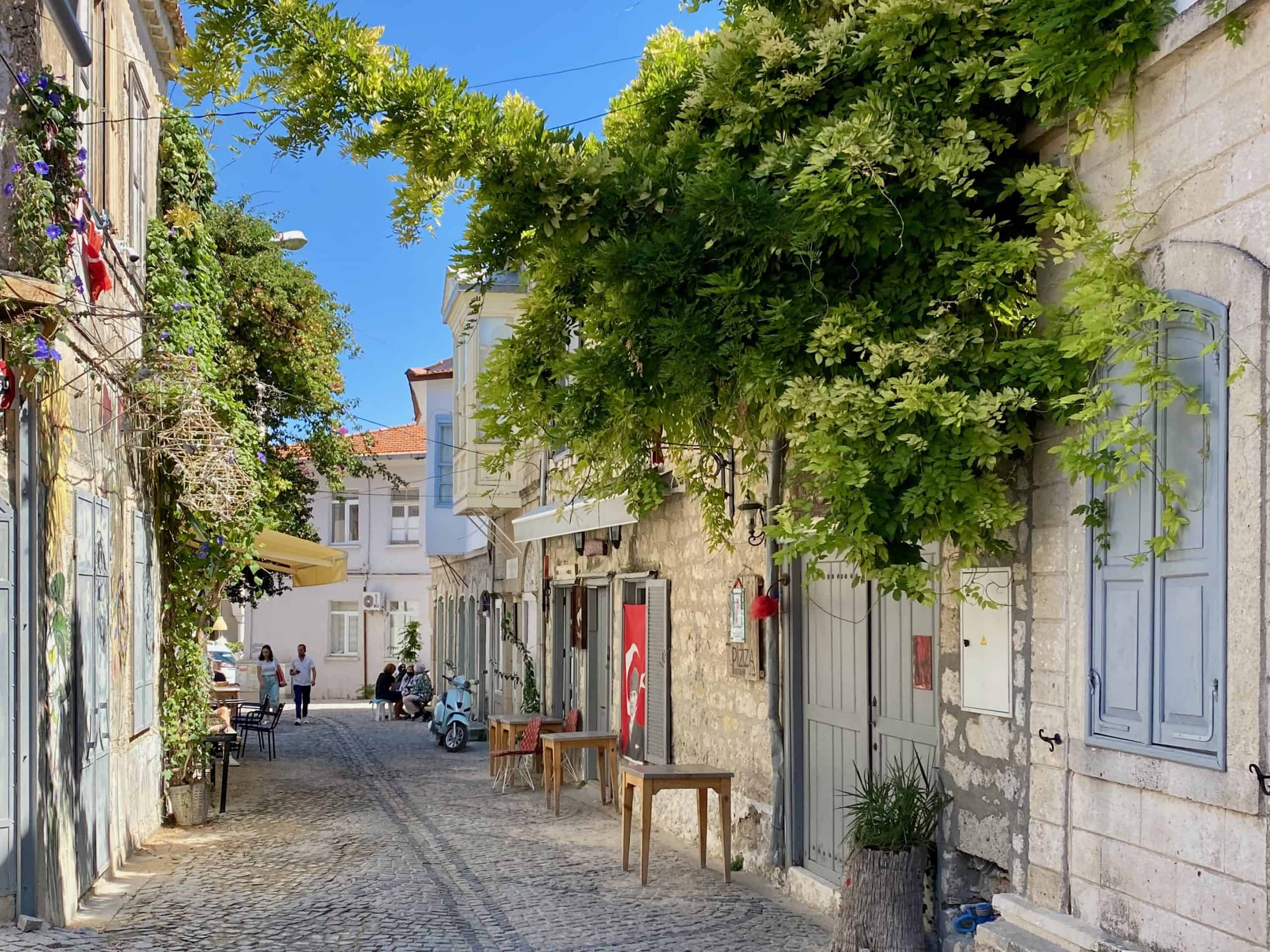
Alaçatı is a quaint town on Turkey’s Aegean coast. At its core, it retains an undeniable Greek essence as you walk along the cobbled streets lined with stone houses and magenta bougainvillea flourishing across roofs and walls. I have visited three times and been equally charmed during each visit. The slow mornings, the long dinners, and the turquoise waters of the peninsula make for a lovely holiday.
Old town Alaçatı is located in the Çeşme area of İzmir Province and remains largely a domestic secret. The visitors are mostly Turkish. That is part of what keeps it feeling real.
Old Town Alaçatı Turkey
Alaçatı has a reputation as a chic escape, particularly among Istanbulites. Celebrities and well-known Turkish personalities make their way there in the summer. And yet, the town does not feel exclusive or pretentious. Perhaps the Turkish hospitality, locally sourced food, and festive Aegean nights keep it honest and humble.
The old town itself is small. You can walk from one end to the other in fifteen to thirty minutes, depending on your pace. The streets are primarily closed to vehicles, so it is an enjoyable walk. The restaurants, cafés, shops, and the Saturday bazaar are all within easy reach of wherever you are staying.
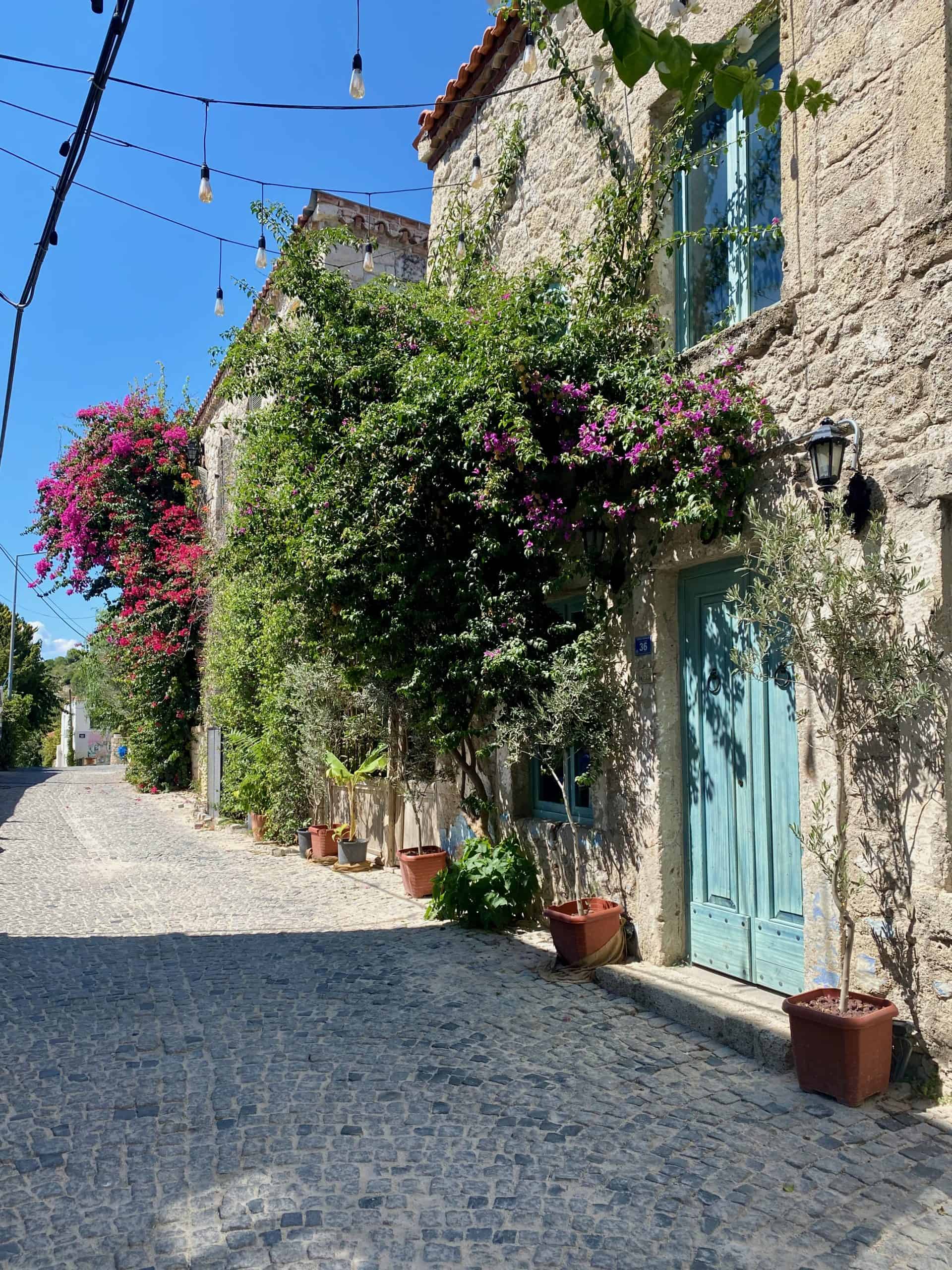
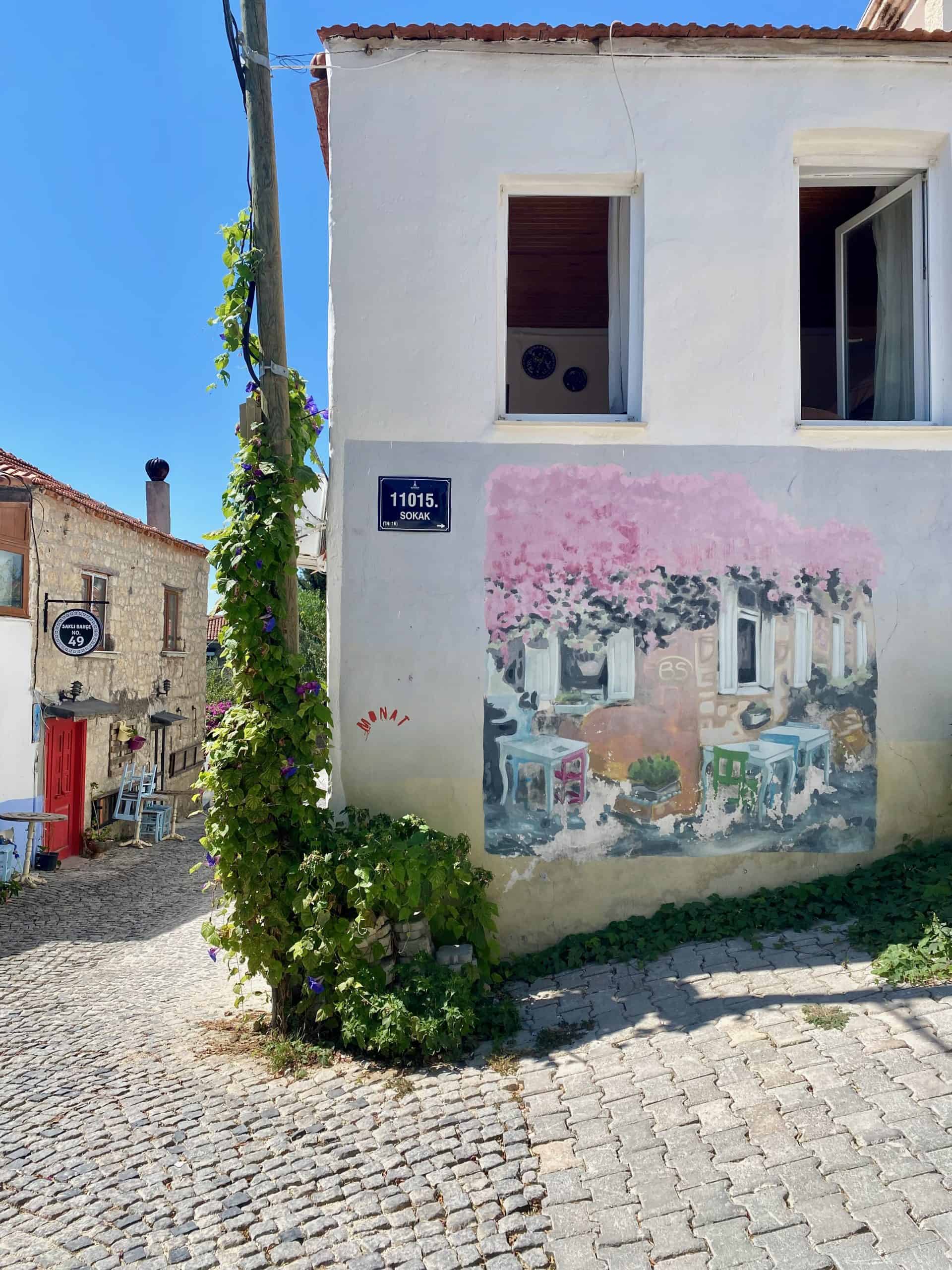
Beyond the old town, Alaçatı extends into a wider area (including Çeşme), with more hotels and restaurants, but the old town is its heart.
Old town Alaçatı is one of Turkey’s most beautiful Aegean villages. It offers a great mix of all the things that make for a great stay. The architecture and soul of the old town are captivating; its boutique hotels are serene escapes from the lively town, and the restaurants offer a culinary experience unique to the land.
The Architecture of Old Town Alaçatı
The buildings in the old town are traditional Greek-style stone houses that have either been preserved or renovated over the years. The stones, both in the cobbled streets and on the house walls, are a defining feature of the place.
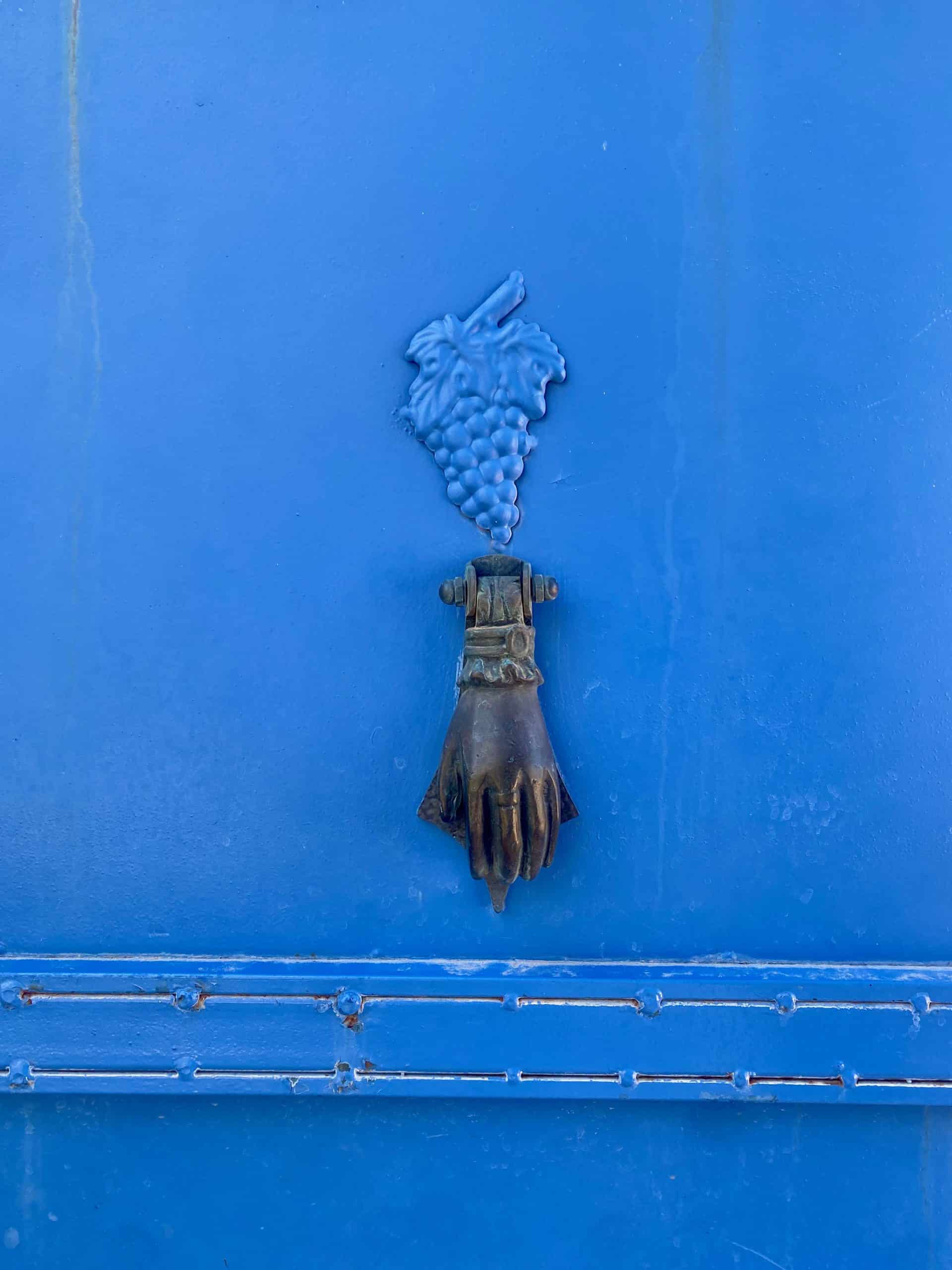
Beyond that, the vibrant doors and shutters painted in red, blue, purple, and pink bring the streets to life. The bougainvillea and ivy growing against the facades, and the trees filling the courtyards, create a lush, natural feel.
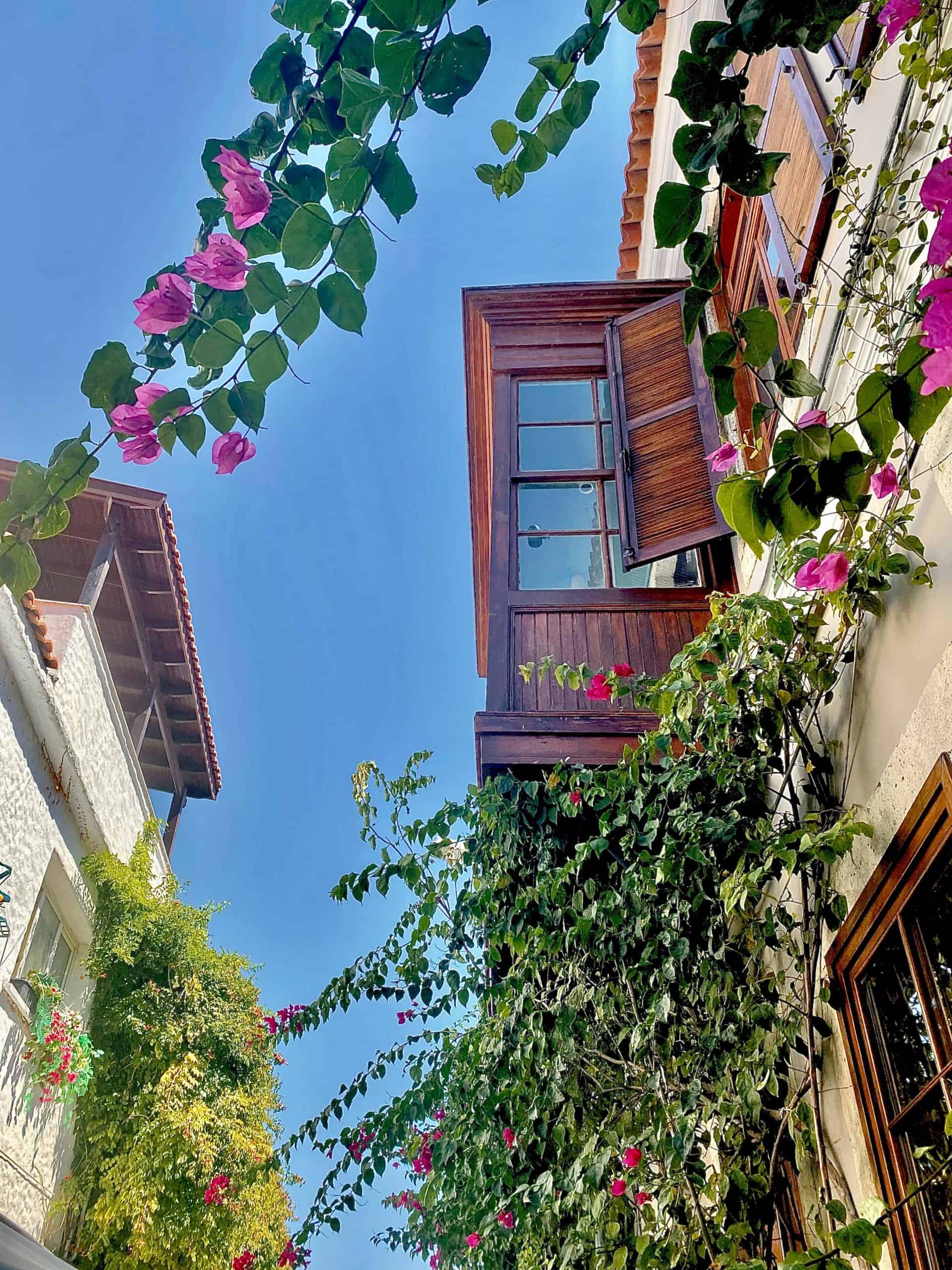
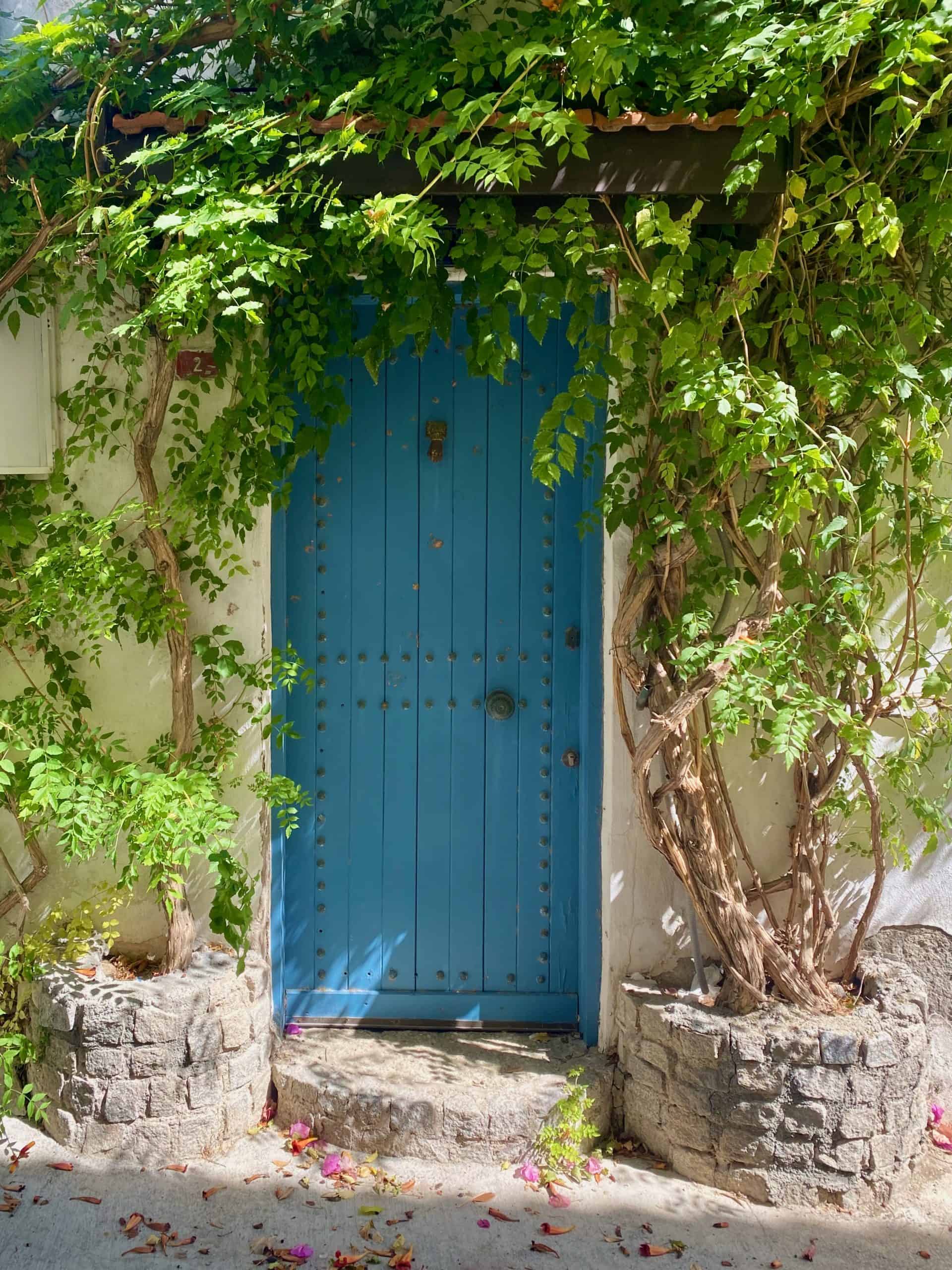
This part of the Aegean coast had a significant Greek population for many centuries, and the architecture clearly reflects that. The stone houses are considered traditionally Greek in their style, and walking through the old town, the resemblance to certain Greek islands is striking.
Alaçatı was founded by Greeks in the 17th century, and at the time, only 1% of the population was muslim. But between 1914 and 1923, the majority of the Greek population either fled during the Greek genocide or was forced to leave as part of a mutual population exchange between Greece and Turkey. Still, the Greek essence was not lost. It had taken root in the land and left its stamp on the local architecture.
Today, most lodging in the old town is housed in these historic properties. Almost exclusively boutique hotels, some in small personal properties that have been renovated to provide additional comfort.
The Windmills
The windmills sit on a hill within the town and are one of its most recognizable symbols. They are a good place to get a panoramic view and one of the most photographed spots in the area.
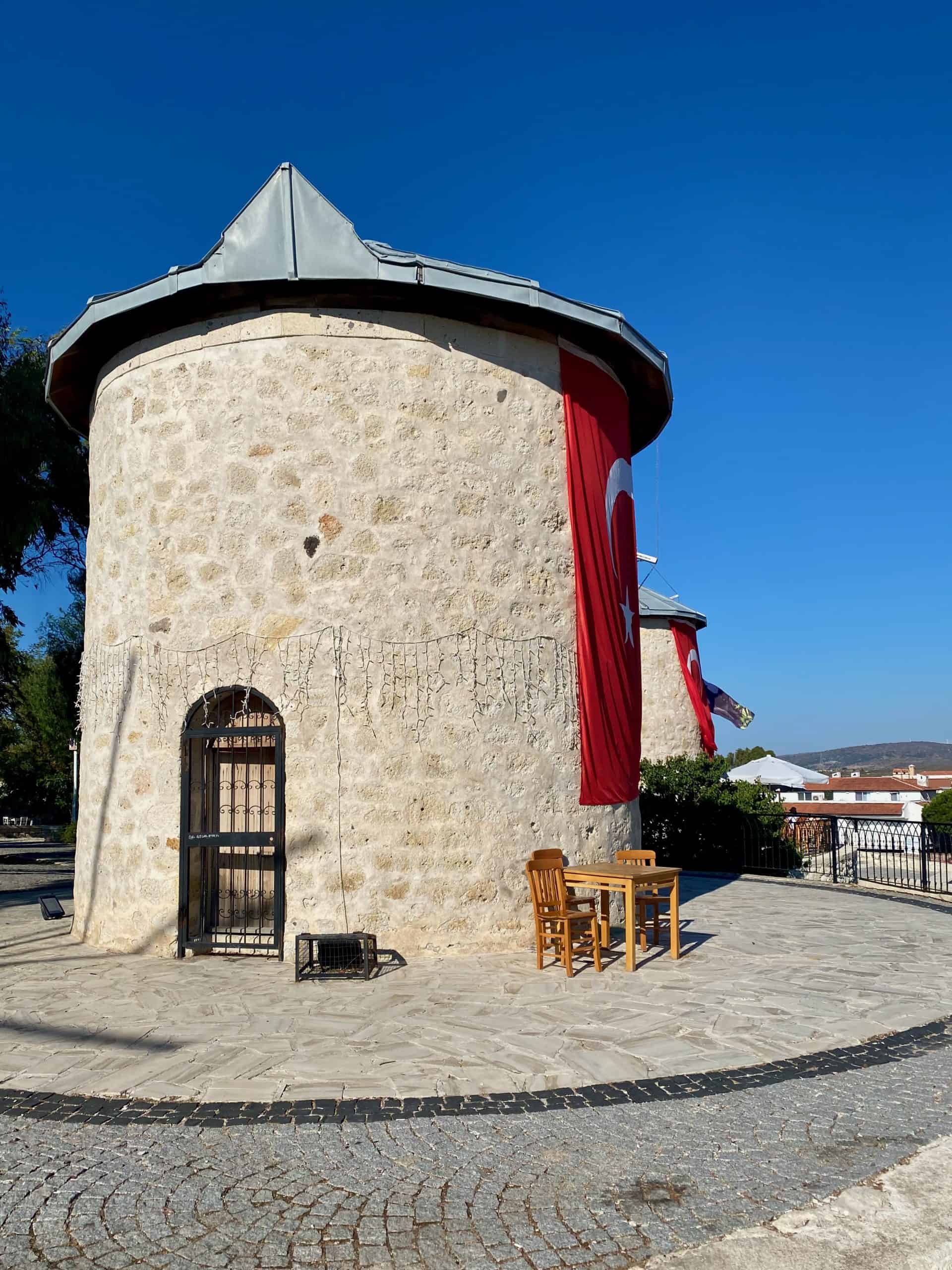
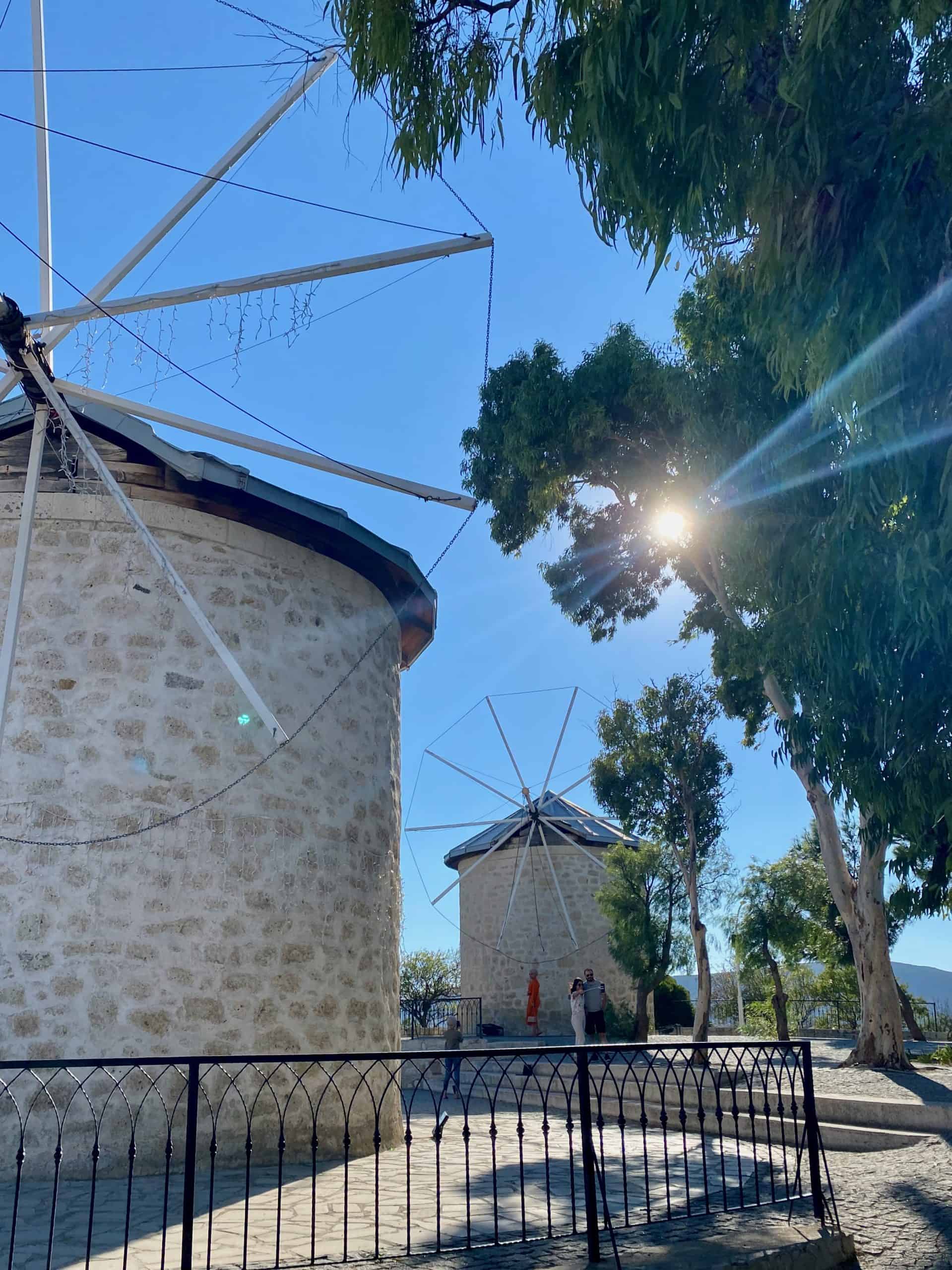
Windmills appear throughout the Aegean coast, on both the Turkish and Greek sides of the sea. They served the same function everywhere, which was to grind grain using the reliable coastal winds. The ones in Alaçatı were positioned where they are to catch the breeze coming in off the water. Today, they are a symbol of the town’s history and its relationship with the coast.
The Food and Cafe Culture
This is perhaps the best part of Alaçatı. The food here is down-to-earth, grounded in local ingredients, served with the heart of Turkish hospitality, and very good. The café culture and the dinner scene are two distinct experiences, and both are worth it.
Mornings are slow to start in Alaçatı. Many hotels offer the traditional Turkish breakfast spread of eggs, vegetables, fruit, nuts, dried fruit, and delicious jams. The table spread blurs the line between breakfast and lunch.

After that, people move into the town, and the coffee shops fill up with tables out on the cobbled streets. It has a Parisian quality in the sense of sitting, watching, and talking without a care for time. Although, to be fair, that kind of cafe culture is deeply Turkish, too.
By midday and early afternoon, people start heading to the beaches. But the mornings in Alaçatı for most belong to the town.
Dinner is a lively affair with a table spread that is often varied and colorful. Many of the restaurants work in the meyhane style. Shared meze plates with cold dishes first, and then warm ones are passed around the table slowly. Rakı is the traditional accompaniment, but in Alaçatı, wine is equally regarded.
The region around Alaçatı, Çeşme, and İzmir as a whole produces wine from native Turkish grapes. Turkish wine is not widely exported, so it is largely unknown outside the country. But it is good, really good!
The wines from this area tend toward the lighter, fresher end, perhaps because they carry elements of the coastal air and soil in them. Having wine with dinner in Alaçatı is part of a local tasting.
While there are many great restaurant options in old town Alaçatı, one restaurant worth going out of your way for is Asma Yaprağı.
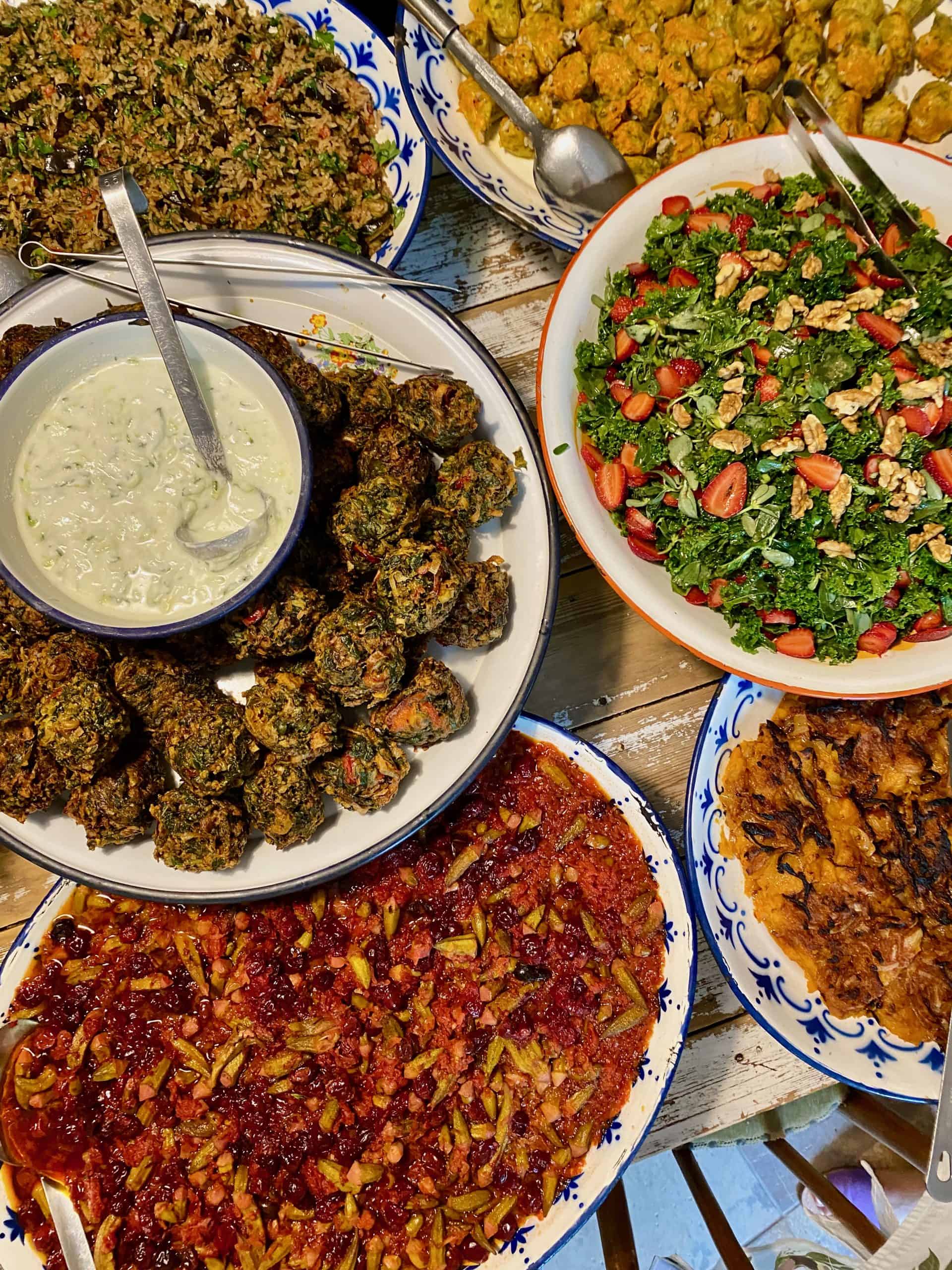
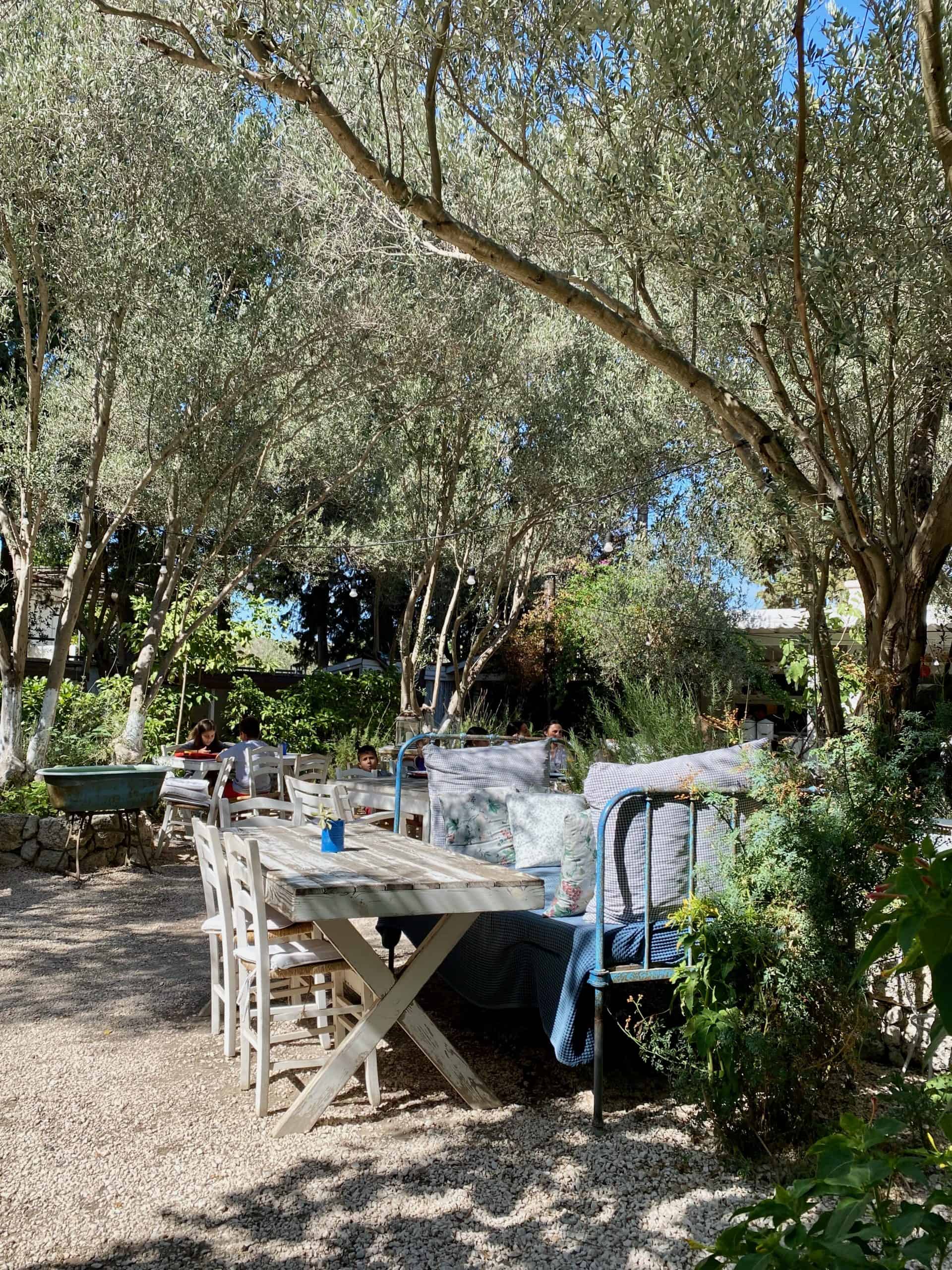
It is a short drive outside the old town and is set in an open garden with mismatched tables, different types of chairs, and plates that look like they came from someone’s own kitchen. The food is farm-to-table in the truest sense, and the menu is built around seasonal ingredients native to the region.
What makes it unusual is how you order. You walk into the kitchen and choose your mezzes directly from what is being prepared, seeing the food before it reaches the table. It is a beautiful experience and has been included in Turkey’s Michelin guide.
The Saturday Bazaar
On Saturdays, the old town hosts a weekly bazaar. Since the town is quite small, this can naturally be added to the day between a slow breakfast and an afternoon at the beach, as it does not require much time.
The bazaar hosts vendors selling a mix of items, including regional products specific to the area and more general items. Beyond what is sold, what makes the bazaar special is its atmosphere. People know each other, and there is a local energy to it, even when tourists are around, that is worth experiencing.
The Beaches of Alaçatı
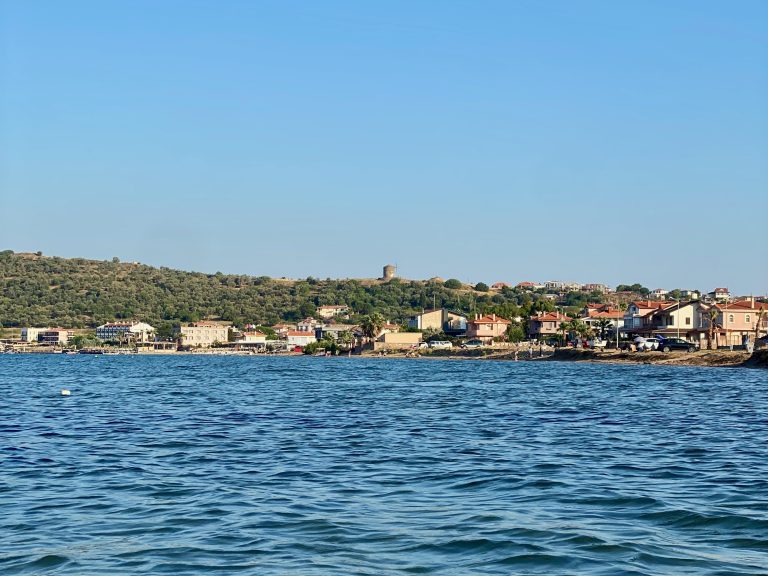
The beaches are not within walking distance of Alaçatı’s old town. You will need a car, a taxi, or transportation from your hotel to reach them, but that is a small logistical step compared to what awaits on the other side. The water in this part of the Aegean is crystalline.
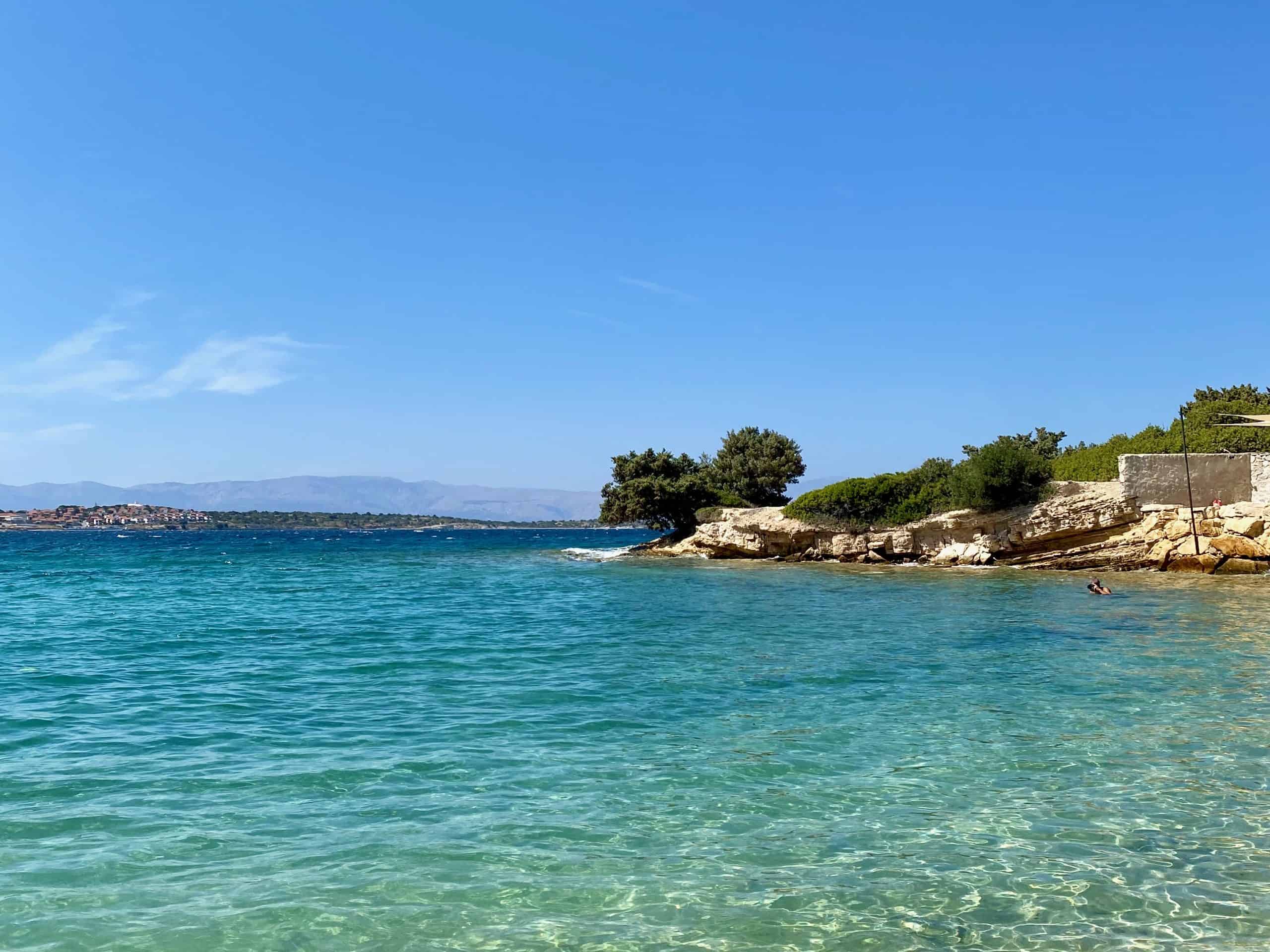
There are both public beaches and beach clubs. Both have mesmerizing views but offer different amenities. The clubs offer sunbeds, attached restaurants, and a more curated experience. Public beaches offer a more commitment-free, relaxed picnic-style experience.
One public beach worth knowing about is Delikli Koy, located in the Çeşme area. It is well known for its chalky white cliffs and crystal-clear water, and it draws a good mix of locals and tourists.
A quick note on water temperature is worth knowing before you plan. The Aegean coast runs cooler than other parts of Turkey’s coastline. In July and August, it is not an issue. In June and later September, the water can be on the cold side.
How to Get to Alaçatı
The closest airport is İzmir Airport. From there, Alaçatı is roughly an hour’s drive from the airport, but it can take longer during morning and evening rush hours.
If you are coming from Istanbul, the two main options are flying into Izmir or taking a road trip. The flight is just over an hour.
The drive from Istanbul is around five to six hours. The roads in Turkey are well-built and well-maintained, and once you are out of the city traffic, the drive is easy and enjoyable. I have done this road trip, and it is a great option if you want to see some of the Turkish countryside. This option gives you a car upon arrival, which is useful for reaching the beaches and exploring the surrounding area, including nearby Çeşme and Urla.
If you would rather not drive, most hotels in Alaçatı can arrange a pickup from the airport. It is not prohibitively expensive, roughly around one hundred euros, give or take, but it is worth asking when you book.
How to Get Around Alaçatı
Inside the old town, you walk. The streets are narrow, mostly closed to vehicles, and everything is close together, so getting around the old town is not difficult.
Getting to the beaches requires a car, taxi, or something arranged through your hotel. Given that Alaçatı caters to higher-end visitors, even the smaller boutique hotels tend to be helpful in arranging this. It is worth asking at check-in what they can arrange.
Having a rental car does give the most flexibility, particularly if you want to explore beyond the immediate area. That said, I have visited twice without a car and found it perfectly enjoyable. As stated earlier, the taxi prices are not prohibitive.
There is also the option for a shared taxi known as a dolmuş. These travel between Alaçatı – Çeşme – Ilıca, and from Çeşme, there are also dolmuşes to both Pırlanta beach and Altınkum beach.
Where to Stay in Alaçatı
Staying in the old town is the best choice for a first visit. The accommodation there is almost exclusively boutique hotels inside the old stone houses. They are typically small, personal, and the decoration seems as if taken straight out of an editorial spread.
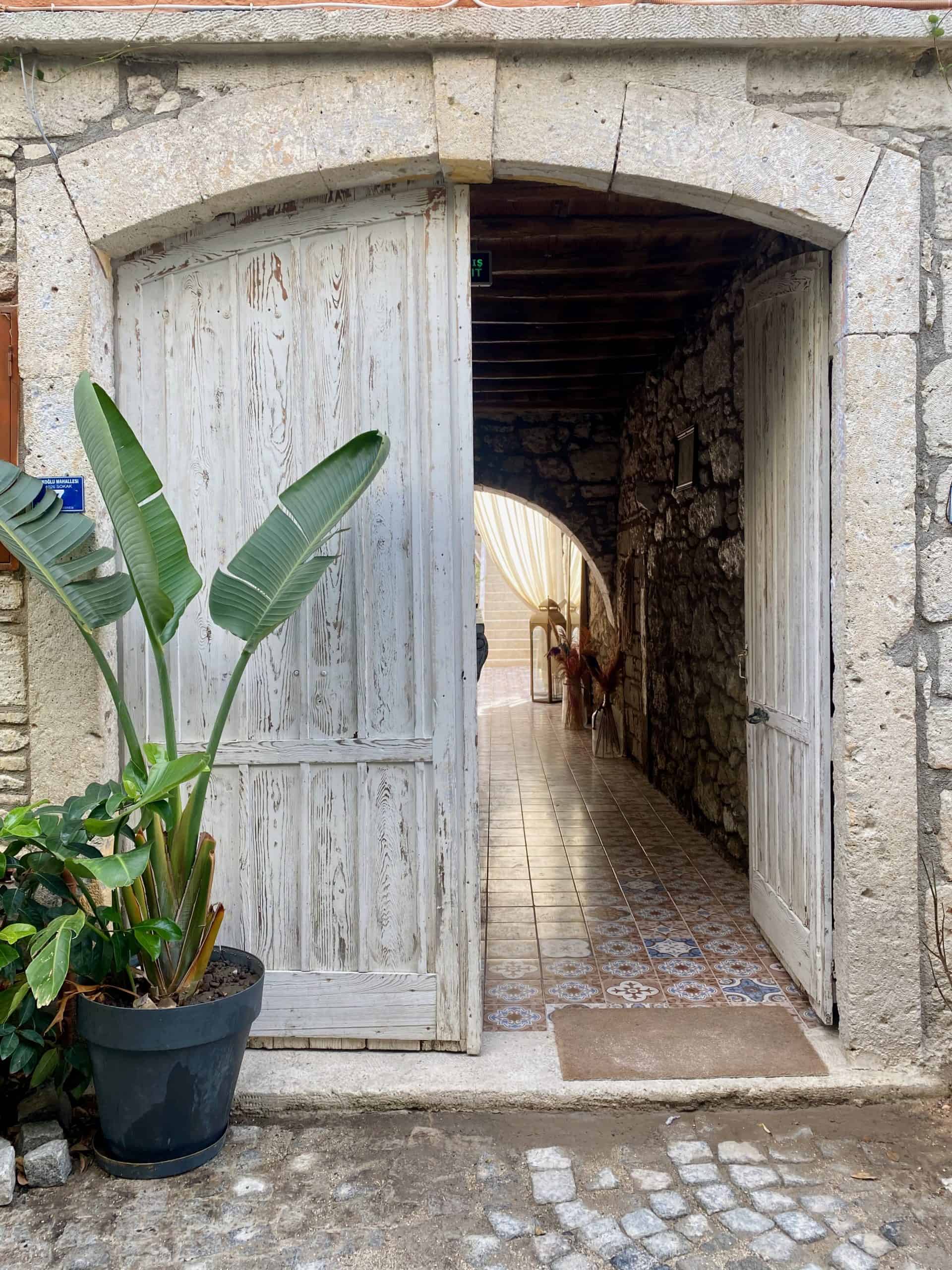
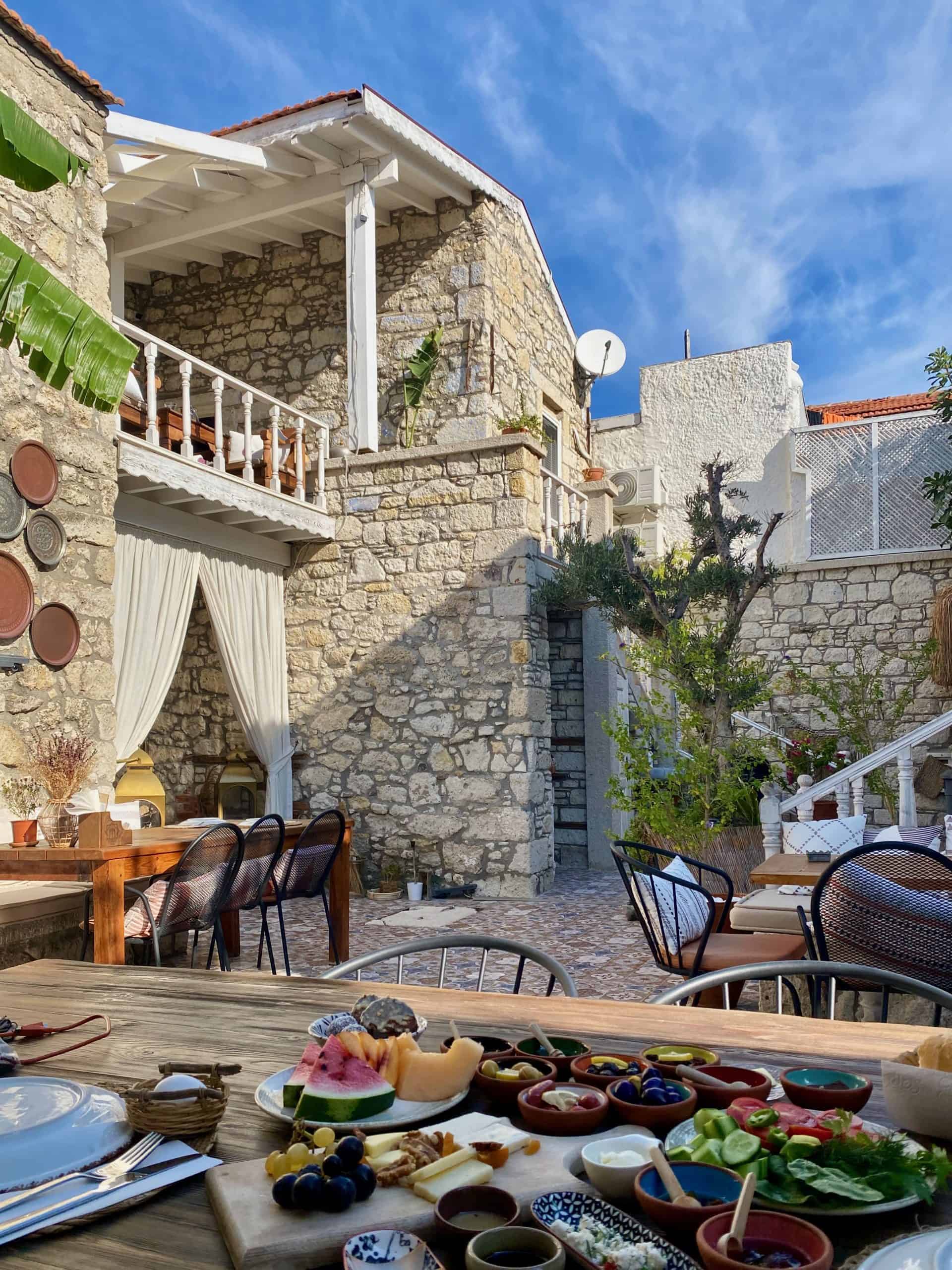
Waking up inside the old town and stepping out onto the cobbled street is part of the experience.
There are also options outside the old town, including some larger properties, particularly in Çeşme, which may suit those who want to be closer to the beaches or prefer more space. But the old town hotels are a wonderful part of the experience. Below are a few options to consider.
Alavya ($$$):
Located in the heart of the old town and featured in Condé Nast Traveler and the Michelin Guide. The decoration stays true to Alaçatı’s stone house heritage, with blue windows and lush gardens, but the property also offers a beautiful pool and full concierge service to help with reservations and planning. Yoga and pilates sessions are available on site.
Breakfast is served buffet style in the main courtyard and features the best local flavors alongside daily-made sweet confections. The on-site restaurant is one of the most highly rated in town and hosts special evenings with live music.
Gaia Alaçatı ($$):
Located in the old town, with two sister properties nearby. The decoration is in earthy tones, faithful to the stone house character of the area. A great Turkish breakfast is served each morning in the main courtyard. A well-priced option that does not compromise on atmosphere.
Morisi Avlu Alaçatı ($):
Set in a renovated Greek stone house in the old town. The rooms are beautifully decorated in fresh pastel tones and the Turkish breakfast served in the morning courtyard is remarkable. A lovely option for those who want the full Alaçatı experience at a more accessible price point.
Additional FAQs
What is Alaçatı known for?
Alaçatı is known for its picturesque old town. The well-preserved Greek stone houses with bougainvillea walls and their cobbled winding streets.
Beyond the architecture, it has a strong reputation for food, beaches, and café culture. It is also a well-known windsurfing destination. Among Turkish travelers, it carries the reputation of a chic summer escape.
Is Alaçatı worth visiting?
Absolutely! I have been three times and look forward to the next visit.
The old town is beautiful, the food is excellent, and the Aegean water is crystalline. The meyhane-style dinners, the local wine, the café mornings, and strolls around the old town are all part of the memories of this summer getaway.
One of my favorite discoveries was the mastic dondurma. Ice cream made with the resin of the mastic tree, a flavor native to this part of the Mediterranean. It has a slightly chewy consistency and a taste that is distinctly of the region. Strolling the old town with one of these is a simple pleasure in a seaside town.
When is the best time to visit Alaçatı?
It is best to visit Alaçatı between the months of June and September. The days will be warm, making the water temperature much more pleasant, while the mornings and evenings tend to be comfortably cool due to the Aegean breeze.
July and August are high season but tend to bring on higher temperatures during the day. In these months, enjoying the old town in the morning and evening is best.
April and May can also be good months to visit. The weather is pleasant, but the old town is not receiving as many visitors as it does during the summer months. The only thing to note is that the water temperature in the neighboring beaches will be slightly cooler than at the peak of summer.
How many days do you need in Alaçatı?
Three to four days is the ideal amount. That gives you time to explore the old town properly, visit a couple of beaches, try more than one restaurant, and settle into the rhythm of the place.
That said, Alaçatı is a great destination for a longer stay. I have spent a full week there and had no difficulty filling it, particularly factoring in day trips to the surrounding area, time on the water, and the simple pleasure of doing very little at a calm pace.
Alaçatı is also accessible as a day trip from İzmir, though staying overnight changes the experience significantly.
Is Alaçatı Turkish or Greek?
Alaçatı is in Turkey, but the question is understandable. This part of the Aegean coast had a Greek cultural character for many centuries, even under Ottoman rule.
In fact, the architecture and essence of Alaçatı old town is inherently Greek. Alaçatı was founded by Greeks, but between 1914 and 1923, the majority of the Greek population was forced to flee or included in the mutual population exchange between Greece and Turkey. And yet, the Greek essence was not lost and is alive in the architecture, flavors, and culture of the old town.
Final Thoughts
Alaçatı old town is small but captivating. The cobbled streets, the stone houses, the colorful doors, the bougainvillea, and the Turkish hospitality add up to create a memorable summer getaway.
Mornings belong to the coffee shops and evenings to long meyhane-style dinners with local wine and Turkish music. It is a festive place with a lively soul.
I have been three times and look forward to the next visit. Alaçatı old town is one of Turkey’s most beautiful villages to stroll and leisurely enjoy.